Sustainable Manufacturing and Environmental Pollution Programme

Kenya

SMEP Poster for 2026 Singapore International Water Week

SMEP Poster for Singapore International Water Week 2026 SMEP successfully submitted a poster presentation for the 2026 Singapore International Water Week held between the 16th and 18th June. RSK sponsored the SMEP submission under the Used Water Management, Reuse & Industrial Water Solutions themes. The poster covered 5 of the SMEPs Grantees aimed at reducing

Read More »

SMEP grantees make their mark at the 3rd Africa Waste is Wealth Summit

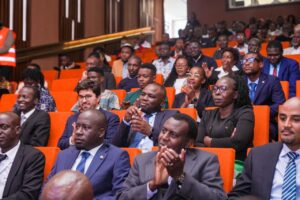
The third edition of the Africa Waste is Wealth Summit (AWWS III), held in June 2026, brought together a broad cross-section of stakeholders from across Africa – government agencies, private sector actors, UN bodies, financiers, researchers, and innovators – united by a common agenda: transforming waste from a problem into an economic and environmental opportunity.

Read More »

Advancing Inclusive Cleaner Production in the Nairobi Rivers Basin: Where Cleaner Production Meets Inclusion, Transforming Work and Safety

The Kenya National Cleaner Production Centre (KNCPC), in partnership with Fintech Frontiers and Kanku Kenya Ltd, is supporting 26 businesses operating along the Nairobi Rivers Basin, with implementing interventions that reduce industrial pollution and strengthen sustainable manufacturing. KNCPC’s work shows that protecting the environment and empowering people are not separate goals—they are part of the

Read More »

Raw potential: How Africa is recasting industrial power beyond plastics

The future of Africa’s industrialisation may not lie in silicon chips or machine learning but in sustainable natural materials and regional cooperation. Across East and West Africa, governments are moving beyond extractive models and towards policies that fuse environmental resilience with industrial renewal. In Ghana, a national policy blueprint is steering the country’s economy towards

Read More »

Circular bioeconomy and closed-loop circular solutions

While the specific figures on the contribution of organic waste to the Republic of Kenya’s gross domestic product (GDP) are not available, the economic potential of this waste is locally and regionally recognised and is growing. Large volumes of organic waste stem from agriculture, food and beverage industries, households, and commercial sources. In Nairobi, organics

Read More »

Gender Equality and Social Inclusion: Spotlight on Mananasi Fibre

Gender Equality and Social Inclusion Spotlight on Mananasi Fibre SMEP funded projects operate in sectors characterised by socioeconomic inequalities, informal and unregulated value chains, and male dominance, yet they are also well-positioned to initiate new inclusive approaches. To mitigate discriminatory practices that perpetuate inequalities, SMEP projects are committed to identifying vulnerabilities, addressing gender-biased social norms,

Read More »

Plastic substitution in developing countries: Sectoral opportunities and challenges

Plastic substitution in developing countries Sectoral opportunities and challenges Plastic pollution poses significant threats to environmental health, human well-being, and economic stability. Emerging research has detected microplastics in human blood and brain tissues, raising concerns about potential long-term health effects. Despite numerous international initiatives aimed at governing plastic use, critical issues persist, primarily due to

Read More »
Scroll to Top