SMEP at Stockholm World Water Week 2026 | Sunday 23 August, 11:00–12:30 CEST (09:00–10:30 GMT) | Room C4, Level 2, Stockholm Waterfront Congress Centre | Session ID 12647
Industrial wastewater treatment and reuse is widely promoted as a triple win: cleaner water for downstream communities, stronger competitiveness for manufacturers, and a meaningful contribution to climate mitigation. The technologies exist. The environmental case is well established. And yet, across emerging manufacturing economies, adoption remains stubbornly limited.
So what is actually holding investment back?
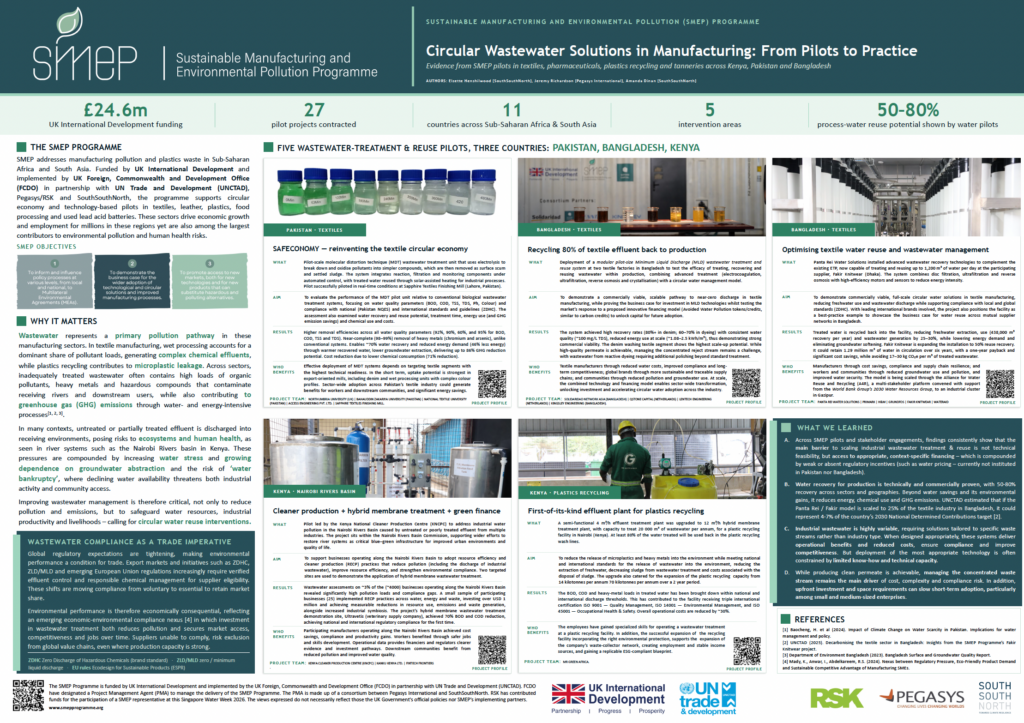
On the opening day of World Water Week 2026, the SMEP Programme convenes a session designed to interrogate that question. This is not a technology showcase. It is a stress test of three assumptions put to a panel of engineers, project developers and financiers who have spent years building, running and funding industrial wastewater solutions in Bangladesh, Pakistan and Kenya.
Three assumptions on trial
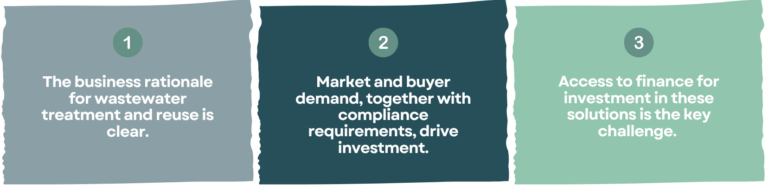
Drawing on implementation evidence from SMEP pilots across the textile and wider manufacturing sectors, alongside the Resilient Water Accelerator’s experience of water stewardship in global supply chains, the session tests three claims that routinely underpin discussions on industrial water investment:
Each of these assumptions shapes how programmes are designed, how regulation is drafted and how finance is structured. Each, our evidence suggests, holds only under particular conditions – and understanding those conditions is where the real work of scaling begins.
Expect candour rather than consensus. Where the economics stack up, they do so because of specific combinations of wastewater composition, water pricing, technology maturity and company vision – not because of a universal business case. Where buyer pressure appears to be driving change, the picture is more tangled than it looks from the outside. Where finance stalls, the constraint may lie less in the availability of capital than in the difficulty of translating water risk and operational benefit into propositions a bank can actually evaluate.
Who you will hear from:
The session is moderated by Elzette Henshilwood and Amanda Dinan of SouthSouthNorth, and convened by SouthSouthNorth and Pegasys International under the SMEP Programme. Session speakers include:
Mafruda Rahman, Country Strategic Manager – Bangladesh, Resilient Water Accelerator
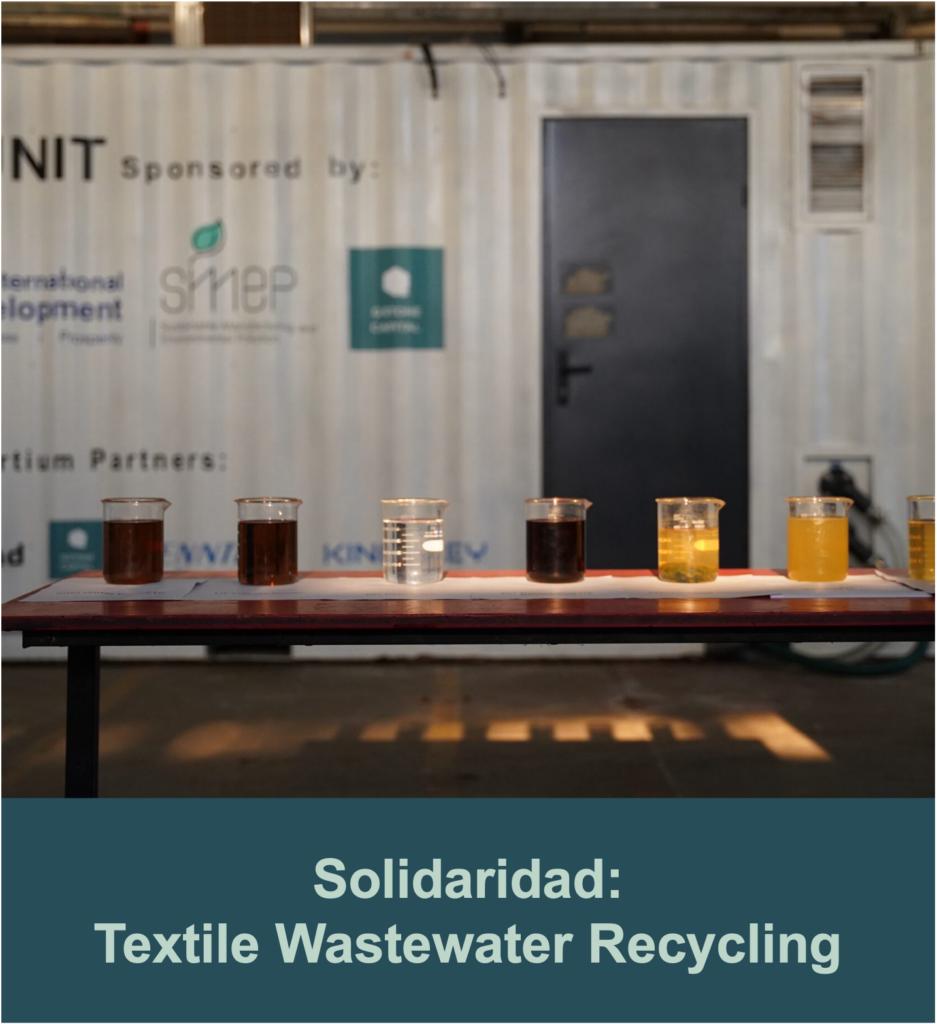
Rucksar Tabassum, Senior Project Manager, QStone Capital (SMEP–Solidaridad zero liquid discharge project, Bangladesh)
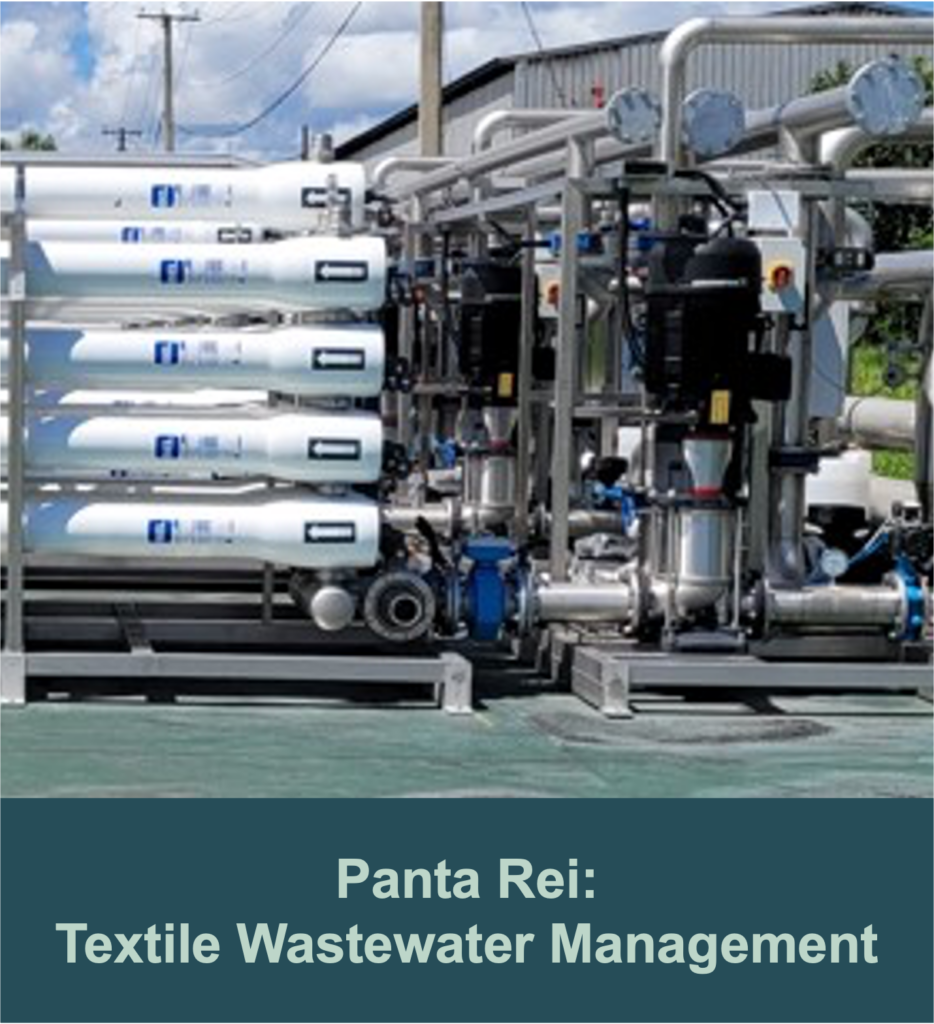
Manuel Romero, Panta Rei Water Solutions (SMEP Panta Rei / Fakir Knitwears project, Bangladesh)
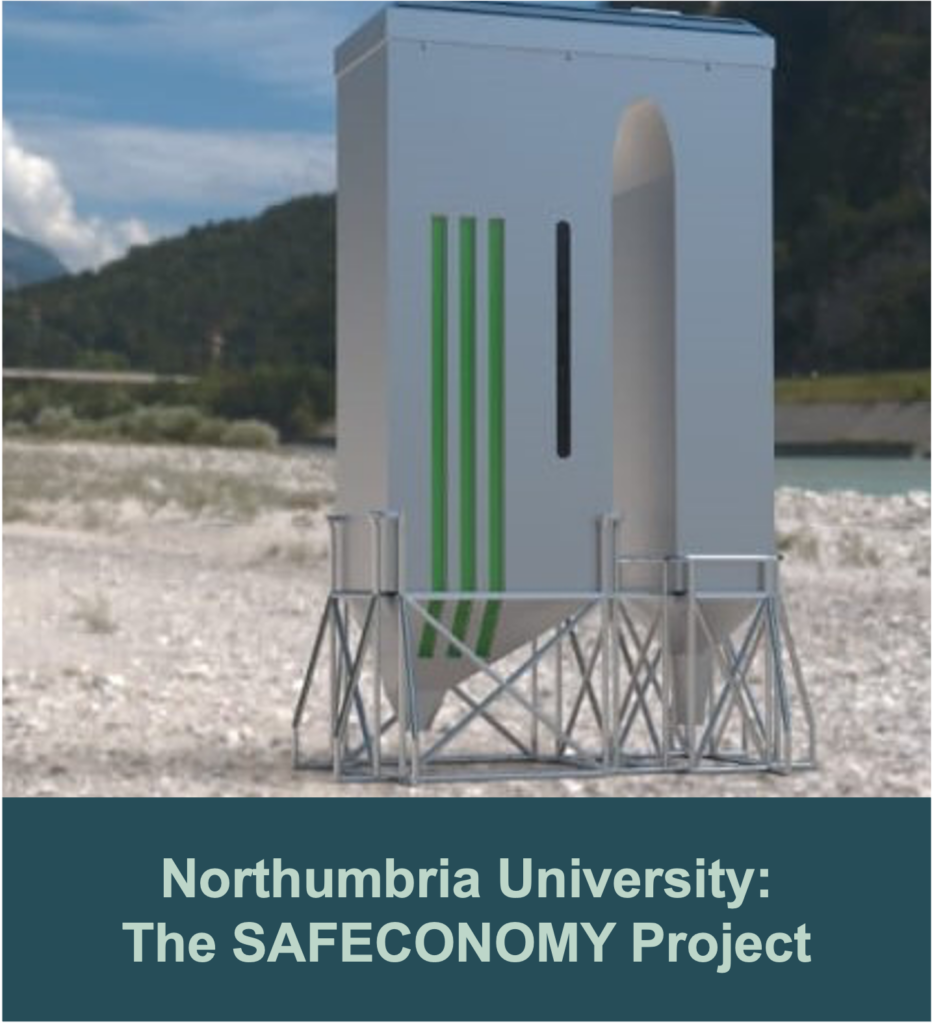
Dr Muhammad Wakil Shahzad, Professor and Chair of Advanced Energy and Sustainability, Northumbria University (SMEP Safeconomy project, Pakistan)
How the 90 minutes will run:
11:00–11:10 – Welcome, introductions and scene setting
11:10–12:10 – Establishing the current evidence base and assessing the validity of the three prevailing assumptions
12:10–12:25 – Looking beyond the assumptions: how to move forward
12:25–12:30 – Closing remarks
Live polling and open Q&A run throughout, so come with a view – you will be asked for it.
Why it matters
World Water Week 2026 convenes under the theme Water for People and Progress. Industrial water use sits squarely at that intersection: how factories abstract, treat and return water determines the health of downstream communities, the security of local water supplies and the stability of the jobs those industries sustain. Our evidence points to a single conclusion – industrial wastewater treatment is not primarily a technology challenge. It is an investment challenge. The task is to translate water knowledge into investment decisions that manufacturers, financiers and policymakers can act on with confidence.
If you work in industrial policy, sustainable finance, supply chain due diligence or cleaner production, this session is for you.
Join us in Stockholm or online. Registration to attend World Water Week 2026 online is free and open now: https://bit.ly/4dpNJ4h
Additional Resources:
SMEP's Wastewater Pilots
SMEP is funded by UK International Development and implemented in partnership with UN Trade and Development (UNCTAD), who provide technical assistance to the programme.