Community trust, inclusive design, and women’s leadership are turning recycling into a fairer green economy.
In many West African cities, plastic waste is both an environmental crisis and a missed economic opportunity. Informal waste systems often mean unsafe working conditions, limited job security, and few meaningful opportunities for women and young people. GIVO (Garbage In, Value Out) set out to change that. They have built a plastic recycling model that delivers environmental impact and social inclusion at scale. With support from the Sustainable Manufacturing and Environmental Pollution (SMEP) Programme and the University of Warwick, GIVO has developed a community-driven, tech-enabled recycling model that is changing how plastic waste is managed in Nigeria and now in Liberia, while creating dignified, inclusive livelihoods.
Designing inclusion into the model from the start
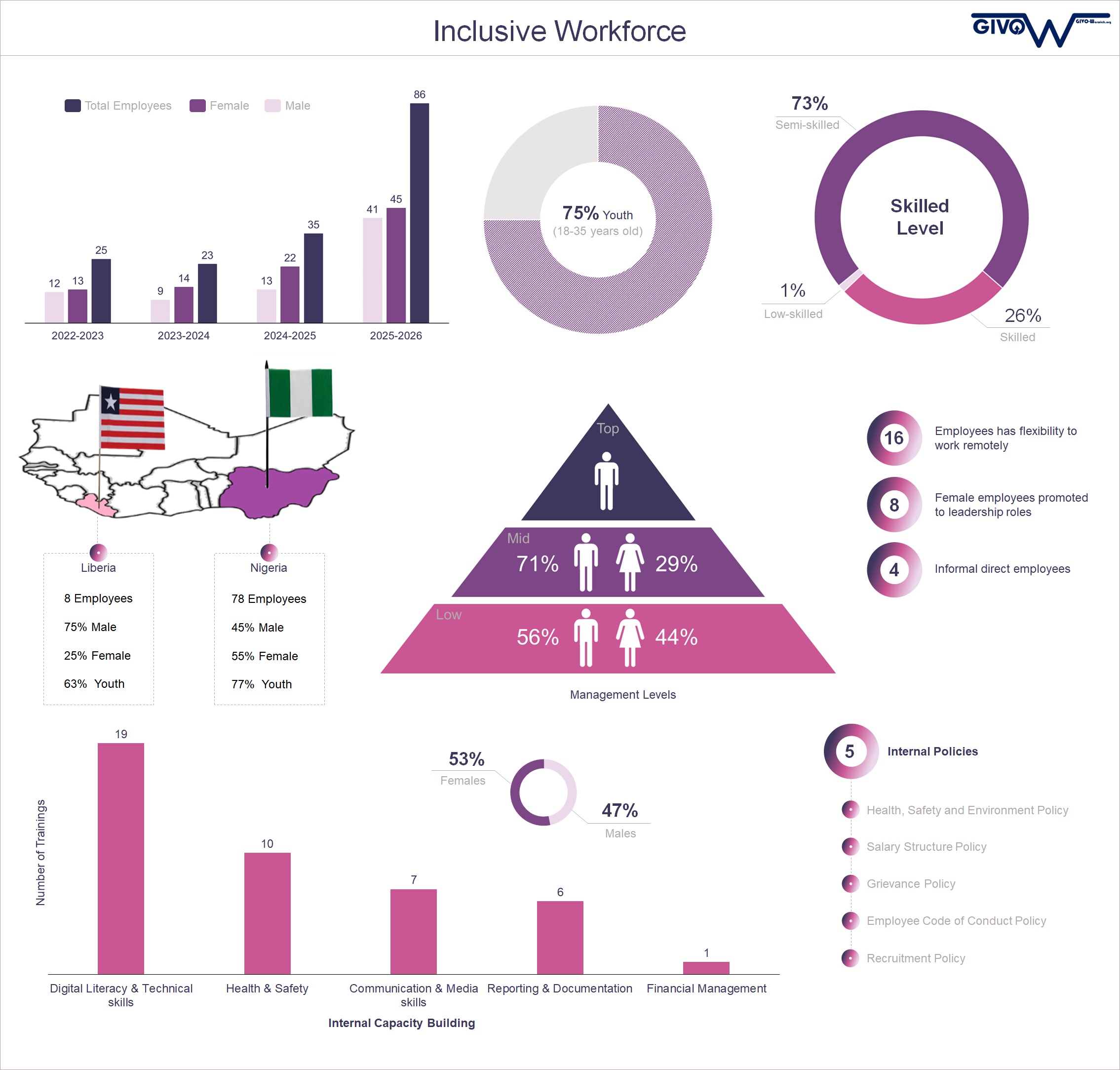
From the outset in 2022, GIVO embedded gender equality and social inclusion into its operations, recognising that environmental solutions work best when they work for everyone. Plastic waste management in Nigeria is traditionally male-dominated and highly informal, often excluding women through rigid schedules, safety risks, and limited access to finance. GIVO responded by reshaping what green jobs can look like. Flexible employment arrangements such as part-time roles, allow women with caregiving responsibilities to participate without being pushed out by inflexible hours. Today, women make up more than half of GIVO’s workforce, an uncommon achievement in the waste sector in Nigeria, where women are often underrepresented, particularly in formal employment, leadership, and higher-income roles. GIVO has sustained female workforce participation at approximately 53% since the project began, demonstrating its commitment to gender inclusion and equitable employment opportunities.
Recognising that financial insecurity can quickly undermine job retention, attendance, and wellbeing, GIVO also supported female staff through practical solutions that addressed everyday barriers to staying in work. For women in low-paid or insecure employment, housing costs and long commutes can increase exposure to risk, add pressure to household budgets, and make it harder to balance paid work with caregiving responsibilities. In one case, a woman working as a collection staff member was able to access a long-term, interest-free loan to secure safe housing close to her workplace. With repayments managed through small salary deductions, the arrangement reduced immediate financial stress and made the support manageable over time.
This kind of support shows that inclusive employment is not only about hiring women into circular jobs, but also creating the conditions that allow them to remain, progress, and participate with dignity. By helping staff secure stable housing near work, GIVO reduced a major source of instability that can lead to absenteeism or drop-out, while also improving personal safety and reliability in day-to-day operations. These actions illustrates how relatively small, well-designed forms of support can strengthen retention, build trust between employer and employee, and turn short-term jobs into more sustainable livelihood opportunities.
Creating employment and inclusive opportunities
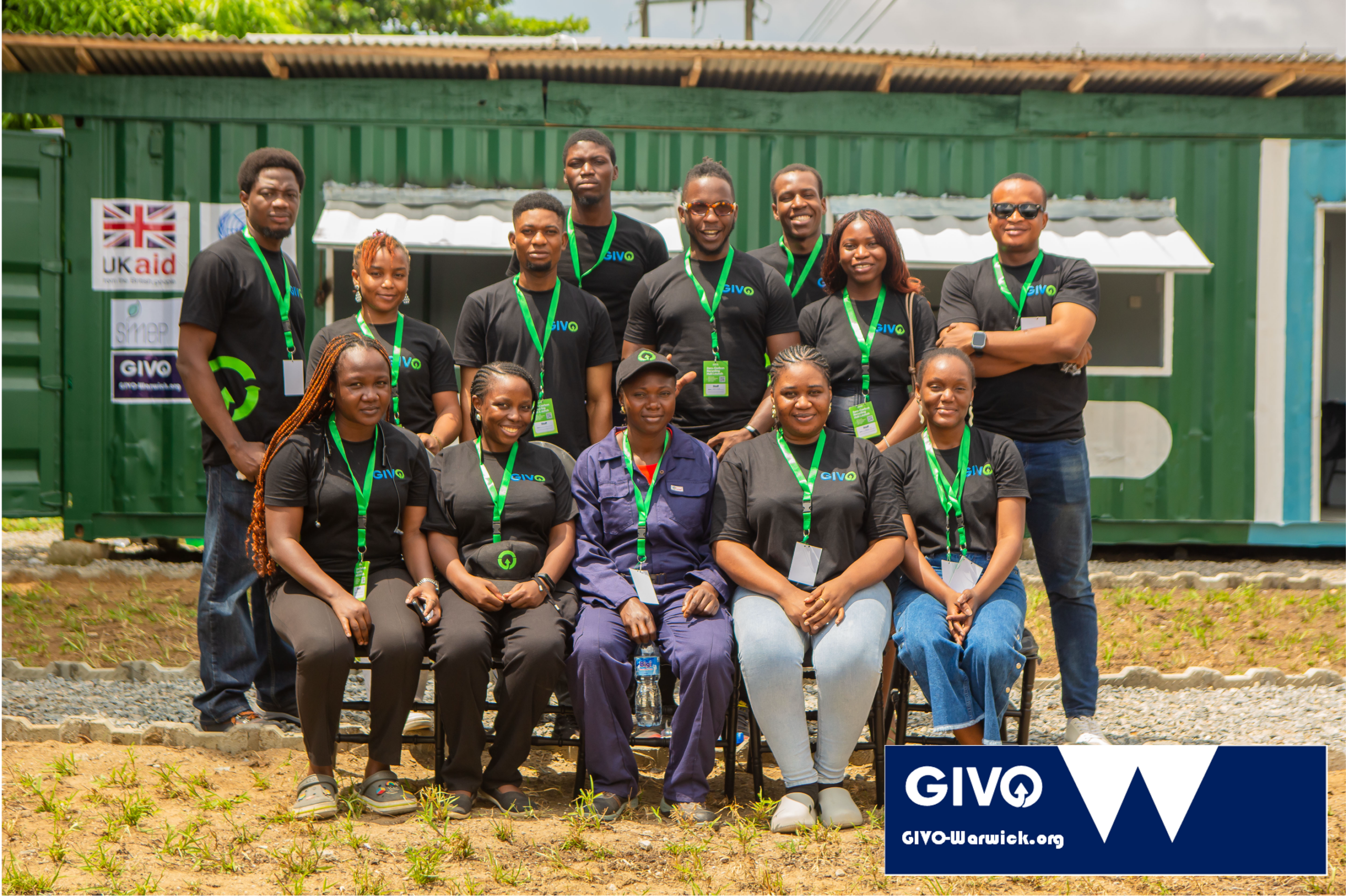
GIVO’s impact is reflected in the employment opportunities created within the recycling sector. By the end of the project, GIVO employed 85 people, including 83 full-time employees and two part-time employees. Women accounted for 45 of these positions, including the two part-time roles, representing more than half of the workforce.
Through its community-based recycling centres, GIVO collects plastic waste from households, schools, and businesses, processes the materials, and channels them into recycling and upcycling value chains that create economic value from waste. Its operating model combines door-to-door collection, free pick-up services, financial incentives for households and waste collectors, and a digital platform that tracks materials, payments, and operational data across the value chain. This integrated approach strengthens the efficiency, transparency, and sustainability of waste management services while creating employment opportunities within the circular economy.
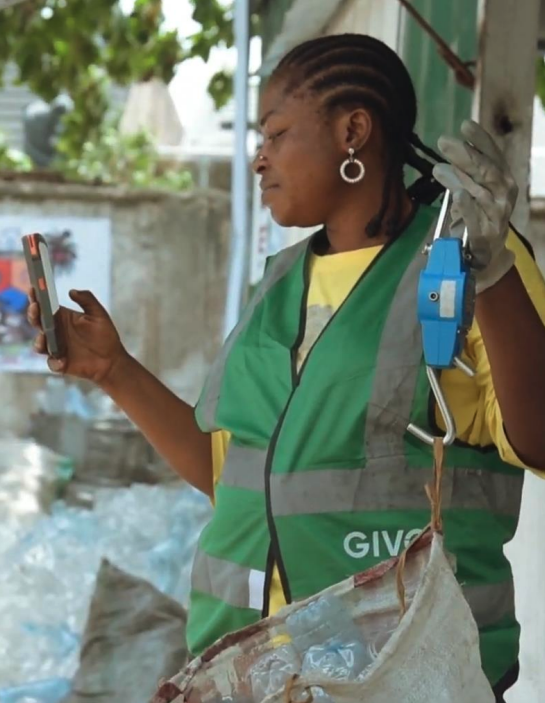
The project also created pathways into formal employment for individuals previously working in the informal waste sector. By the end of the project, four employees had transitioned from informal waste work into formal roles at GIVO, including two women collectors. These transitions demonstrate the potential of the recycling sector to provide more secure employment and improved working conditions.
Women are also increasingly represented in leadership positions across the organisation, holding 44% of lower-level management positions and 29% of mid-level management positions. Their experiences highlight the wider social impact of these opportunities.
Her experience illustrates how employment, training, and opportunities for advancement can contribute to improved livelihoods and greater confidence, recognition, and empowerment for women in the recycling sector.
Digital inclusion that expands access
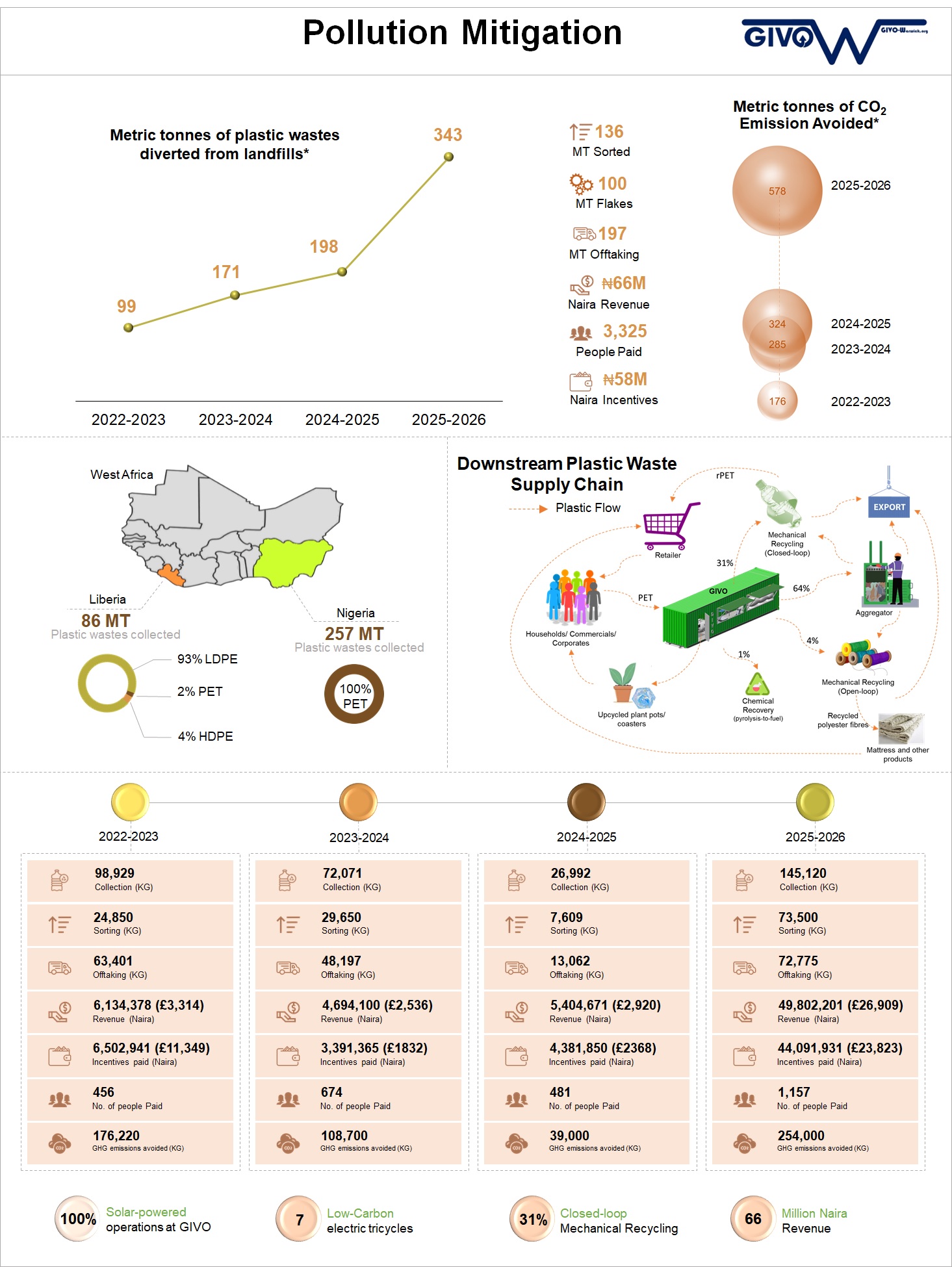
At the heart of GIVO’s model (shown on the right) is a digital platform that tracks plastic waste from collection to processing and rewards households and collectors for participation. This system has been designed to remove barriers. GIVO offers free plastic waste pick-up services, ensuring participation is not limited by income, mobility, age, or disability. Incentives are paid through digital wallets, improving financial inclusion for people without access to traditional banking. For women and informal workers, this means greater control over earnings, more transparency, and more reliable access to income.
By combining digital tools with community‑based service delivery, GIVO makes the circular economy accessible to households that are often excluded from formal recycling systems.
Building skills, confidence and voice
Inclusion at GIVO goes beyond jobs. It is reinforced through training, skills development, and accessible engagement, particularly in a technical field where women are often under-represented. Two rounds of gender and social inclusion training helped participants challenge stereotypes, recognise different needs, and design more equitable solutions. This was complemented by technical and business training in health and safety, plastic segregation, greenhouse gas awareness, digital literacy, marketing, communication and media skills, reporting and documentation, and financial management. Women represented 53% of all employees trained, helping embed inclusion into daily operations rather than treating it as a side activity.
Community engagement was also designed to be inclusive. Alongside in-person outreach, GIVO uses online and social-media channels to reach people who cannot attend physical meetings because of time, distance, or household responsibilities, expanding participation among women and young people.
Scaling impact: From Nigeria to Liberia
The strength of GIVO’s inclusive model lies in its scalability. After proving successful in Lagos and Abuja, GIVO partnered with Harbel Recycling Centre Ltd owned by Firestone Tire & Rubber Company to pilot the approach in Liberia. Scaling responsibly ensures that waste collection models remain financially viable, environmentally sound, and socially inclusive, preventing harm to communities while maintaining quality service delivery. Expanding with a strong business case creates stable, decent jobs by formalising informal work, improving income security, and building long-term economic opportunities in the recycling value chain.
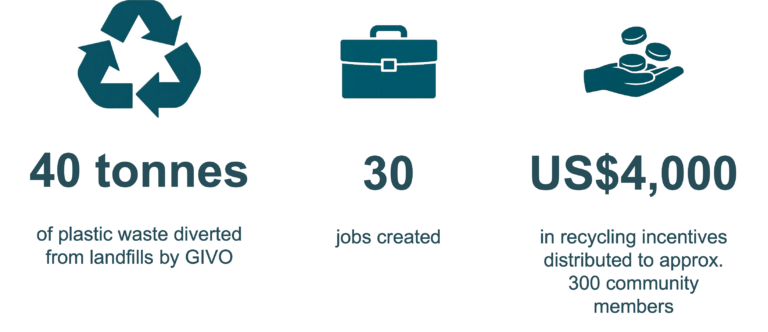
The results were immediate. During the pilot operation, GIVO diverted 40 tonnes of plastic waste from landfills, created 30 jobs, and distributed over US$4,000 in recycling incentives to around 300 community members. Encouraged by its effectiveness, Firestone formally transferred operation of the Harbel Recycling Centre to GIVO in December 2024.
The transition marked an important milestone: a community‑driven, data‑led waste management model rooted in inclusion successfully operating beyond its country of origin.
The results behind the story
GIVO’s performance is strongest where operational efficiency, environmental outcomes, and inclusive participation reinforce one another. Its decentralised, solar-powered collection model uses electric tricycles operating within a 2-5 km radius of each centre, reducing transport distances, limiting reliance on fossil fuels and grid electricity, and improving route planning through digital scheduling and tracking.
Across seven centres in Nigeria and Liberia, the model maintained consistent collection services despite unreliable electricity, fuel price volatility, weak road infrastructure, and broader economic pressures. Off-grid solar centres, electric collection vehicles, and strong downstream partnerships helped keep materials moving reliably through the recycling value chain.
The results show how this model turns everyday participation into visible environmental and social value. To date, GIVO has collected 343 metric tonnes of plastic for recycling, engaged 3,325 depositors, and paid ₦58 million in incentives to people participating in the recycling system. These figures tell a story of households, schools, businesses, and informal collectors becoming active contributors to a circular economy that rewards participation rather than treating waste as an invisible public burden.
At the same time, GIVO has created 85 decent jobs, avoided an estimated 578 metric tonnes of CO₂ emissions, and built 53 partnerships and collaborations that strengthen the wider recycling value chain. These results show a model that is building trust, income, skills, and practical pathways into a more inclusive green economy.
Trust, inclusion and growth in Apapa, Lagos
In Apapa, Lagos, GIVO boosted participation by integrating baseline research, strategic communication, and responsive service delivery. Between October and December 2025, findings from a study of 1,400 residents were used to refine outreach efforts and strengthen community trust. A simple but impactful step clearly displaying GIVO’s central phone number enabled residents to verify the programme, enhancing its credibility. As a result, the number of active depositors rose from about 50 to 320, alongside increased engagement from women and young people.
One teacher’s experience captures this shift:
She then organised collections for her entire school, which had stored over 80 kg of plastic. GIVO teams made multiple collection trips, revealing strong community readiness once trust was established.
The programme also created wider benefits. Fourteen local volunteers (eight women, six men) gained paid experience in research and data collection, while the centre manager stepped into a stronger leadership role. Increased demand exposed gaps in call routing, prompting system improvements that strengthened operations across Nigeria and Liberia.
As GIVO continues to grow, the Apapa experience highlights a clear opportunity, by investing in trust, inclusive communication, and responsive systems, partners can unlock community participation at scale and build a more equitable circular economy.
A just transition to a circular future
Since 2022, GIVO has intercepted more than 300 tonnes of plastic waste while building a model that shows environmental action can also advance gender equality and social inclusion. Across its operations, women now make up more than half of the workforce and hold over half of management roles, while young people and informal workers are gaining safer, more dignified pathways into the green economy through training, paid engagement, and stronger links to formal systems.
What makes this model distinctive is that inclusion is built into how GIVO recruits, supports, and engages people through flexible work arrangements for women with caregiving responsibilities, safer working conditions and protective equipment, digital wallets that widen financial access, and trusted communication channels that help communities feel informed and respected. These design choices reduce barriers to participation and make it easier for women, youth, and low-income households to benefit directly from recycling systems that have historically excluded them.
As GIVO expands across Nigeria, Liberia, and beyond, its experience offers a clear lesson for circular economy programming. When trust, accessibility, and inclusion are designed into environmental solutions from the start, the results go far beyond cleaner neighbourhoods. They create opportunities for women to lead, for young people to build skills and income, for communities to participate with confidence, and for green growth to become more equitable and sustainable. GIVO’s work goes beyond only recycling plastic to reshaping who benefits from the transition economy.
Faith Gara
SMEP PMA Gender Equality and Social Inclusion (GESI) Lead
With inputs from the Doorgha Ragoobur (University of Warwick Project Lead) and the GIVO Africa team.