Sustainable Manufacturing and Environmental Pollution Programme

Advancing Inclusive Cleaner Production in the Nairobi Rivers Basin: Where Cleaner Production Meets Inclusion, Transforming Work and Safety

The Kenya National Cleaner Production Centre (KNCPC), in partnership with Fintech Frontiers and Kanku Kenya Ltd, is supporting 26 businesses operating along the Nairobi Rivers Basin, with implementing interventions that reduce industrial pollution and strengthen sustainable manufacturing. KNCPC’s work shows that protecting the environment and empowering people are not separate goals—they are part of the same journey towards thriving communities and ecosystems.

Why This Matters — For Business, the Environment and Society

The Nairobi Rivers Basin (NRB) is vital for Kenya’s socio-economic health because it supports over half of Nairobi’s population, close to 4,000 industries, and major informal economies while forming a freshwater system that flows into the Athi River and eventually the Indian Ocean, making it a shared regional water resource. Its rehabilitation is essential to reverse pollution, protect public health, and strengthen ecological resilience, while also supporting regional cooperation since downstream counties and neighbouring countries depend on the basin’s water quality for environmental stability, disaster risk reduction, and sustainable development.

Coordinating action for Cleaner Water, Safer Workplaces, and Stronger Governance

In the Nairobi Rivers Basin, Resource Efficiency and Cleaner Production (RECP) is essential not only for environmental compliance but also for acting as the technical backbone for industry while also enabling social transformation within industries. RECP improves worker safety, strengthens safeguarding, and promotes more inclusive practices across facilities. By introducing cleaner technologies such as improved wastewater treatment systems, RECP creates new technical roles, upgrades existing positions, while opening opportunities for environmental officers, plant operators, and monitoring technicians. These shifts allow businesses to hire more women, youth, and persons with disabilities into skilled and better protected jobs.

At the same time, RECP reduces operational costs and enhances regulatory compliance, enabling companies to reinvest in safer workplaces and more stable employment. In this way, RECP not only supports cleaner production—but helps build a more inclusive, capable, and resilient workforce across the Nairobi Rivers Basin.

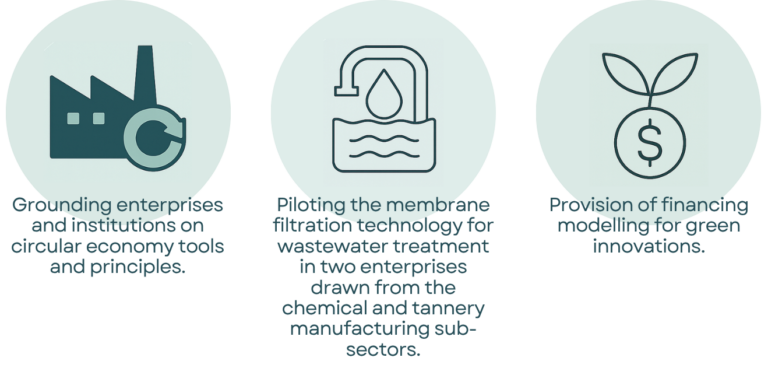
Since January 2024, the SMEP Programme has been supporting in the implementation of the project, “Wastewater Treatment in Nairobi: Scaling Resource Efficiency and Cleaner Production in the Nairobi Rivers Basin, with an overall objective to reduce pollution and enhance environmental compliance of enterprises and institutions within the Basin. The project aspires to achieve this through three key components:

KNCPC’s work through the SMEP funded project is also strengthening enforcement and compliance mechanisms needed to sustain RECP interventions across the Nairobi Rivers Basin. Through these functions, KNCPC helps turn Kenya’s environmental regulations from paper commitments into actionable, enforceable standards that industries can realistically meet and regulators can confidently uphold.

The project supports regulators and industries alike by generating trusted technical evidence, identifying non-compliance and pollution risks, and building the capacity of enterprises to meet environmental standards. It further enables compliance level investments by supporting financing pathways, showcasing workable technologies for wastewater management and cleaner production, and contributing to enforcement-focused dialogues and policy processes that drive long-term sector transformation.

KNCPC is also shaping policy reform through the SMEP project by generating evidence, bringing stakeholders together, demonstrating practical technologies, and informing real-world regulatory decisions. Their technical leadership ensures that new policies are not only data-driven and enforceable but also aligned with Kenya’s wider vision for cleaner, more accountable industrial growth. Throughout this work, the project team has remained intentional about integrating gender equality, decent work principles, and strong social safeguards, ensuring that policy improvements benefit people and the environment.

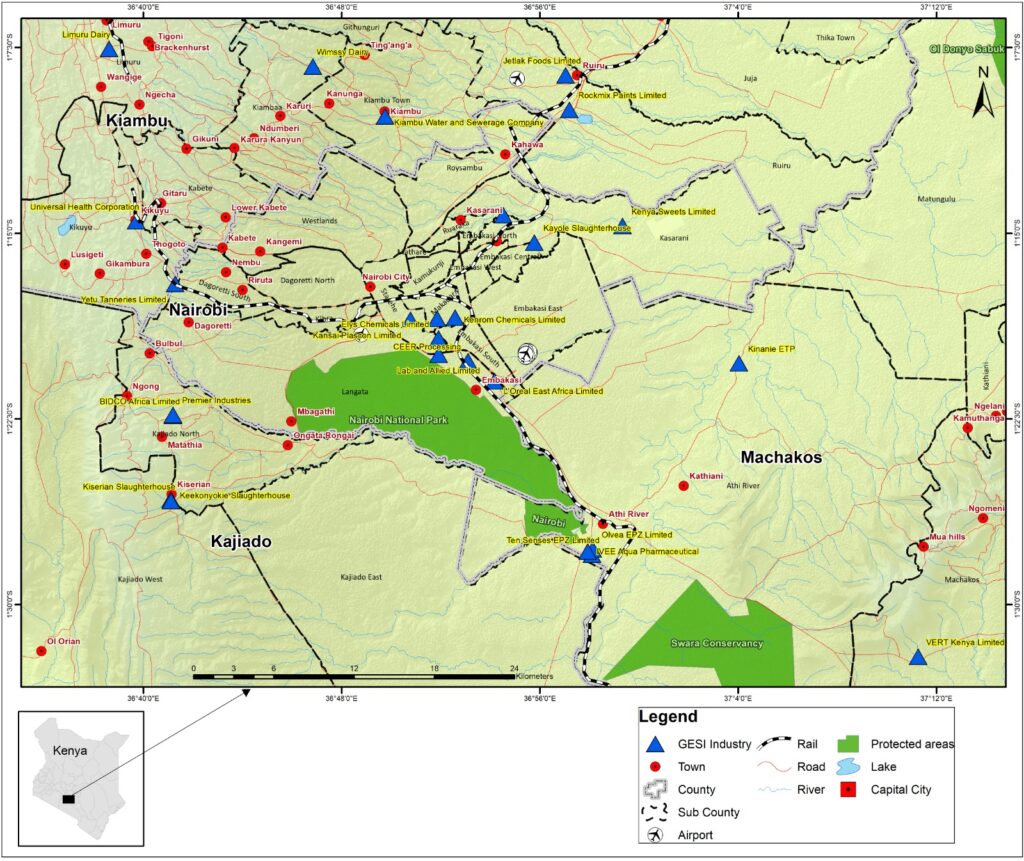
The project is implemented across five counties within the Nairobi Rivers Basin—Nairobi, Kiambu, Machakos, Makueni, and Kajiado.

Alignment with the SMEP GESI Framework — Emphasis on Inclusive Technical Solutions

Kenya continues to experience significant gender gaps in employment, leadership roles, and access to opportunities. Women remain underrepresented across formal employment sectors. Leadership roles show gender imbalance, despite constitutional provisions pushing for equity. Occupational segregation and systemic inequalities persist, slowing economic participation. This establishes a clear need for interventions that increase women’s representation, particularly in technical and decision‑making positions.

To date KNCPC and partners have advocated for inclusive technical solutions, championed through inclusive hiring, gender-balanced training, embedding gender equality and social inclusion (GESI) indicators in audits, and tailoring action plans and safeguarding measures.

“The GESI assessments [undertaken by KNCPC] didn’t just reveal gaps—they uncovered industries ready to champion inclusion in manufacturing and revealed that technical solutions achieve greater impact when underrepresented groups are enabled to participate meaningfully.”
Rose Teigut
KNCPC Technical Officer and GESI Coordinator

Project Team and Consortium Capacity

With a 53 member team and new women in key technical roles, KNCPC is raising the bar on safety, safeguarding, and fair labour practices. By championing women in technical and managerial roles, the project is building a future where opportunity is driven by skill—and Kenya’s green transition includes everyone.

Project Beneficiaries

The project’s training programmes are already creating real impact, equipping enterprises with the skills to apply RECP while ensuring women and men participate equally. These benefits ripple far beyond the trained teams, reaching outsourced and informal workers, neighbouring communities along the Nairobi Rivers Basin, and marginalised groups who gain access to new opportunities through more inclusive hiring and policies. By strengthening the capacity of enterprises to adopt cleaner, safer practices, the project is helping build workplaces that protect people, reduce pollution, and deliver wider social safeguarding.

“Building cleaner industries begins with building people—and ensuring women and youth are fully part of that journey.”
Peter Ohon
KNCPC Senior Technical Officer
Emerging Good Practices and Monitoring and Support

The project has begun monitoring early results and providing targeted technical support to participating facilities, with a focus on identifying GESI improvements and quantifying investments and cost savings linked to gender responsive practices. Initial findings show that gender responsive actions are already enhancing operational performance, strengthening compliance, and improving workplace culture. Across the 26 engaged businesses, there is a notable increase in women’s employment (making up 33% of staff on average), greater placement of women in roles traditionally reserved for men, improved workplace environment (provision of relevant PPEs), reduced environmental footprint, improved productivity, disability inclusion and a reduction in staff time losses resulting from fewer workplace incidents and injuries. Specific emerging good practices include:

  • Women now lead operations at the wastewater treatment demonstration sites at Yetu Tanneries and Ultravetis East Africa Limited;
  • L’Oréal East Africa is nearing gender parity under strong ethical and diversity frameworks;
  • Kansai Plascon has established clear reporting and grievance mechanisms; and
  • disability inclusion is taking shape through companies placing persons with disabilities in strategic operational roles.

Yetu Tanneries exemplifies this progress

The company hired a graduate woman, Anne Wanjiru, to manage all operations and appointed a female leather technologist to lead RECP implementation and run the new wastewater treatment plant. Women’s participation in production roles has risen, with women now comprising one‑third of the workforce and forming the majority of casual workers. The facility has also introduced several safety improvements—including upgraded PPE allocation, improved chemical storage, and restricted access to hazardous materials—leading to a reduction in occupational incidents. Additionally, Yetu Tanneries has trained 20 women in machine operation and maintenance within the ferrous manufacturing unit, placed four women in the Engineering department, and continues to offer internships and trainee positions that often transition into full employment.

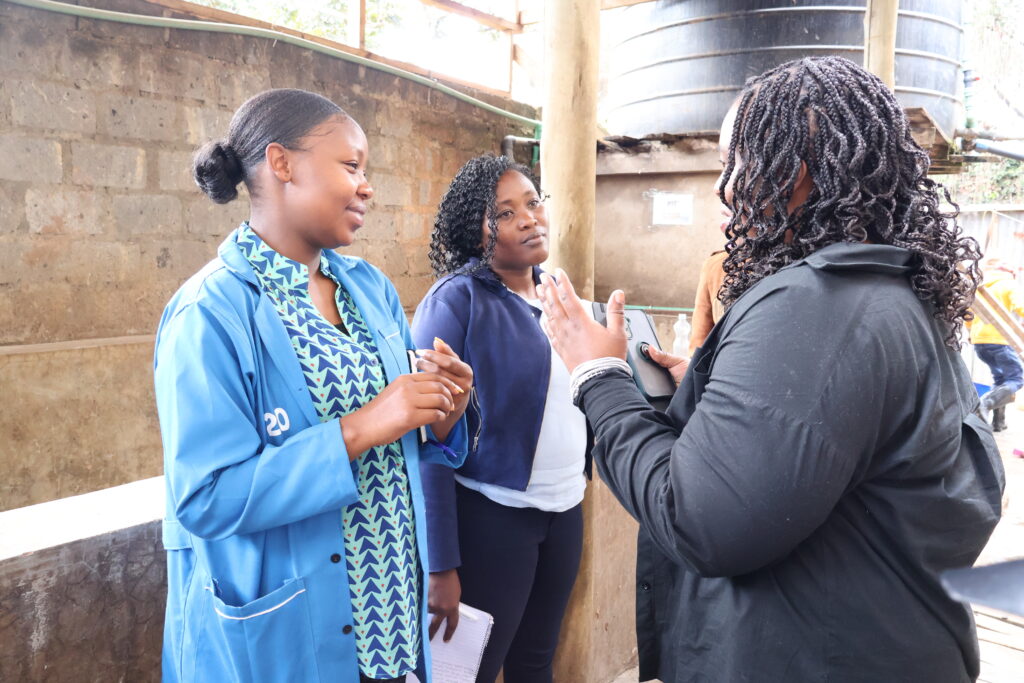
Anne Wanjiru in discussion with Lorraine Dimairho and Rose Teigut on the significant benefits the water treatment plant will have at Yetu Tannery.
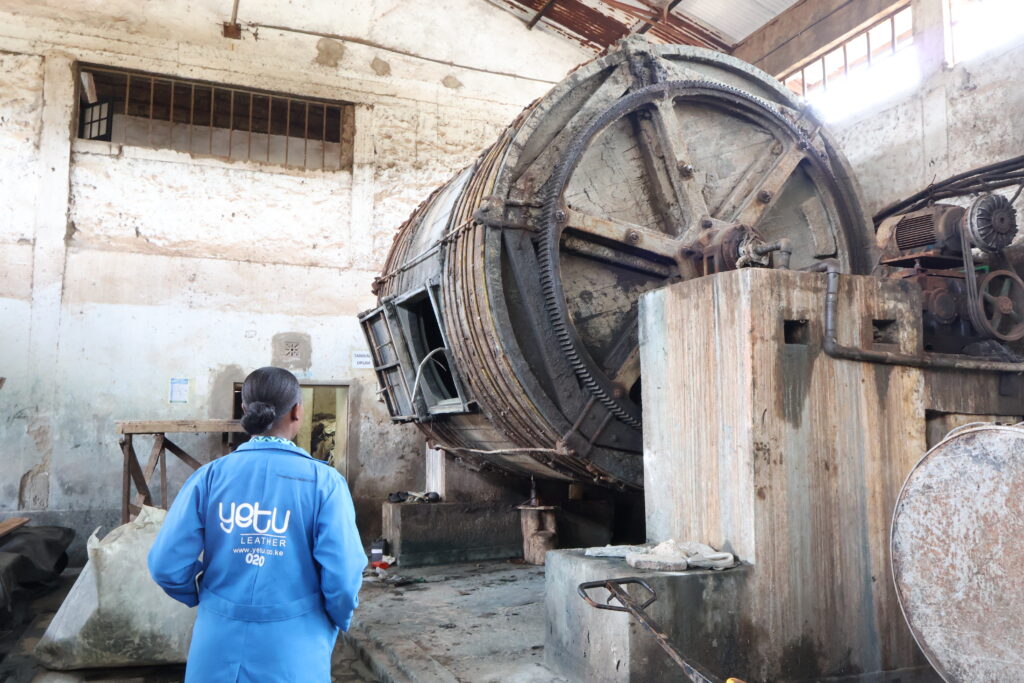
The operations manager, Anne Wanjiru, at Yetu Tanneries observing the chroming equipment at the facility.
“Buy-in from top management catalysed successful uptake and improvement of social inclusion in day-to-day practice, beyond policy. When women operate advanced wastewater systems, it reshapes who is seen as a leader in Kenya’s green transition.”
Rose Teigut
KNCPC Technical Officer and GESI Coordinator

Despite progress, significant GESI challenges persist across participating industries. Deep-rooted gender stereotypes continue to influence hiring and job allocation, limiting women’s participation in technical and leadership roles and contributing to gender pay gaps and exposure to unsafe working conditions, particularly among outsourced workers. The inclusion of persons with disabilities and youth remains constrained by inaccessible infrastructure, experience-based hiring practices, and the absence or weak implementation of gender and disability-responsive workplace policies. Limited awareness and prioritisation of GESI principles—often overshadowed by short-term business objectives—continue to reinforce structural inequalities.

KNCPC developed targeted measures and recommendations by using the findings from the RECP in plant assessments to pinpoint the operational and compliance gaps limiting industry performance. These evidence-based insights enabled KNCPC to design practical actions that build facility capacity, strengthen environmental management, and support safer, more inclusive operations. The measures recommended and embedded in facility GESI Action Plans include: 

"Integration of GESI in RECP intervention turns compliance from a cost into a capability: lower operational costs, fewer safeguarding incidents, stronger brands."
Patricia Otunga
KNCPC Technical Officer

Indirect Solutions and Systemic Effects: Safeguarding and Environmental and Health Outcomes

As these interventions take root, clear and measurable impacts are emerging across facilities. Strengthened GESI practices are not only closing compliance gaps—they are improving risk management, stabilising workforces, and building the long-term capacity needed to sustain RECP investments. Early gains are already visible: pilot wastewater technologies are reducing pollution and improving effluent quality, delivering real environmental and public health benefits for downstream communities.

Keekonyokie Slaughterhouse Biogas Plant Installation

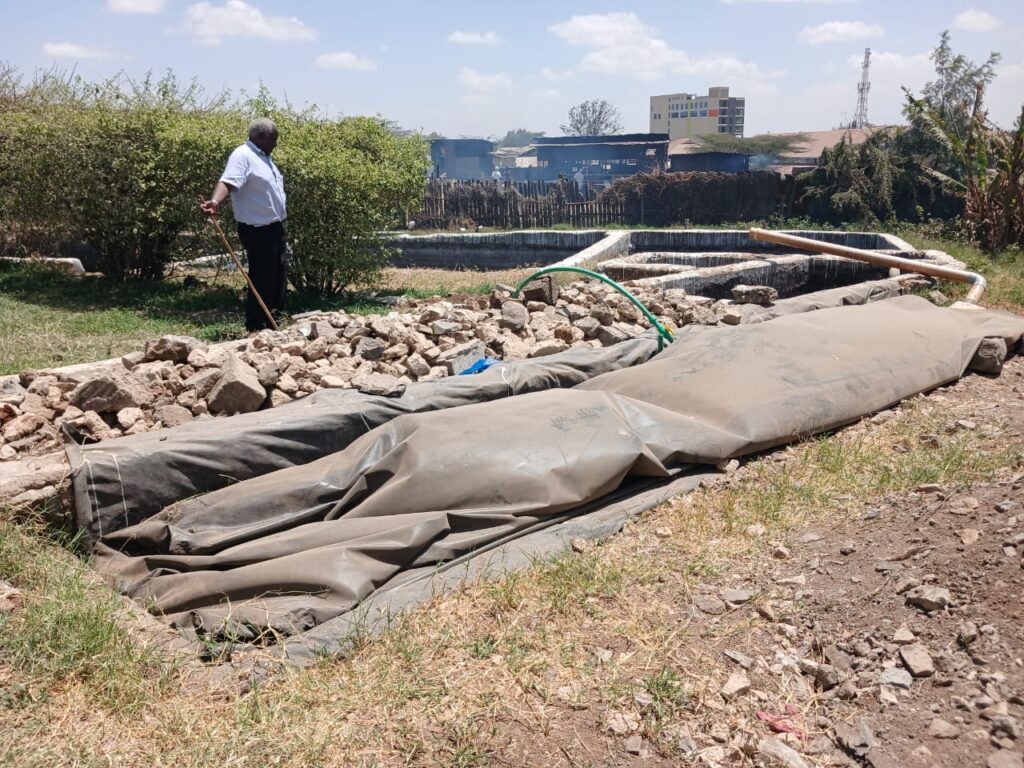
The facility acquired a grant from the Afrisol Foundation (Dutch organisation) to install a biodigester with capacity of 625 litres which is a key waste-to-energy solution transforming high-strength waste into renewable energy and high-value biofertilizer while preventing pollution. The environmental benefits of the biodigester include significant reduction in GHG Emissions (methane is 25x denser than CO2), solid waste reduction and production of organic biofertilizer and reduction in deforestation and fossil fuel use.

Resultant biogas is supplied to a hotel within the facility which is used for cooking and are charged a subsided cost. This has reduced reliance on firewood and charcoal as sources of fuel by the facility improving work conditions for the women in the kitchen section.

This case study highlights how implementation of RECP measures further impact neighbouring communities by promoting public health, environmental protection and livelihoods.

Kitchen section at the hotel benefitting from biogas from Keekonyokie Slaughterhouse waste-to-biogas facility
Bio-digester installed at Keekonyokie Slaughterhouse for biogas production
Hotel benefitting from the biogas supplied by Keekonyokie Slaughterhouse

Enterprises are adopting stronger waste management practices, embracing circular practices, and reducing exposure and risks for workers and neighbours. Training and action planning are also sparking wider workplace reforms, from improved reporting mechanisms and better OSH coverage for outsourced staff to CSR efforts that support marginalised communities.

Overall, SMEP’s catalytic support is translating cleaner production ambitions into concrete GESI, environmental compliance, and improved productivity performance gains—proving that combining technical solutions with social inclusion is driving lasting environmental and human-centred impact across the Nairobi Rivers Basin.

Picture of Faith Gara

Faith Gara

SMEP Gender Equality and Social Inclusion Lead
With inputs from Lorraine Dimairho (SMEP Portfolio Lead: Organic Waste and Water) and Rose Teigut (KNCPC Technical Officer and GESI Coordinator).

Scroll to Top