Oil price shocks reach far beyond the pump: into the plastic and synthetic fibres woven through global trade. Yetmaterial substitutes,derived from agricultural residues and renewable biomass,already produced in developing countries, remain constrained by trade rules, standards and market access.
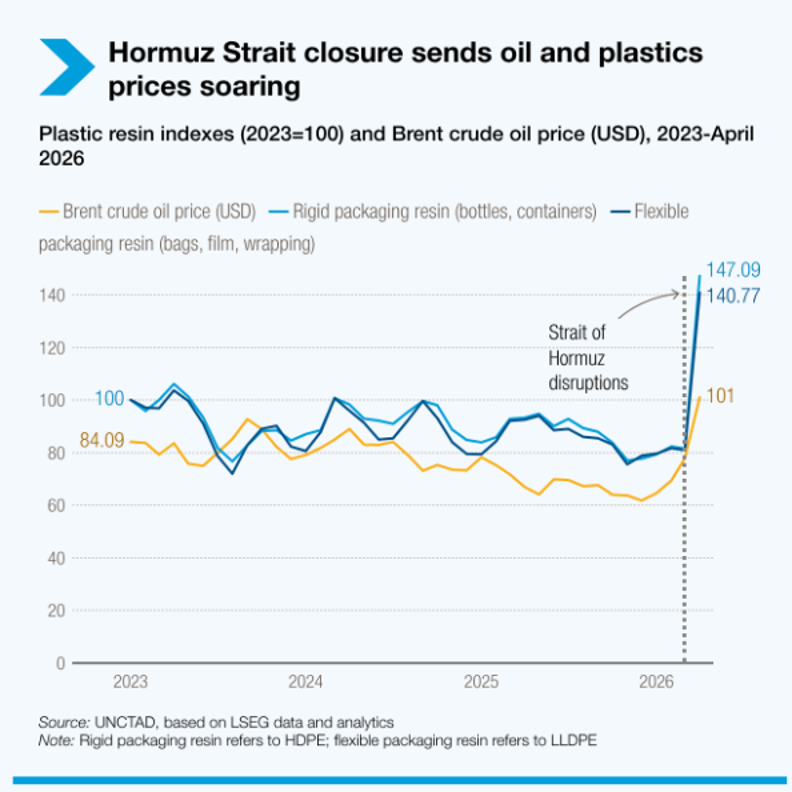
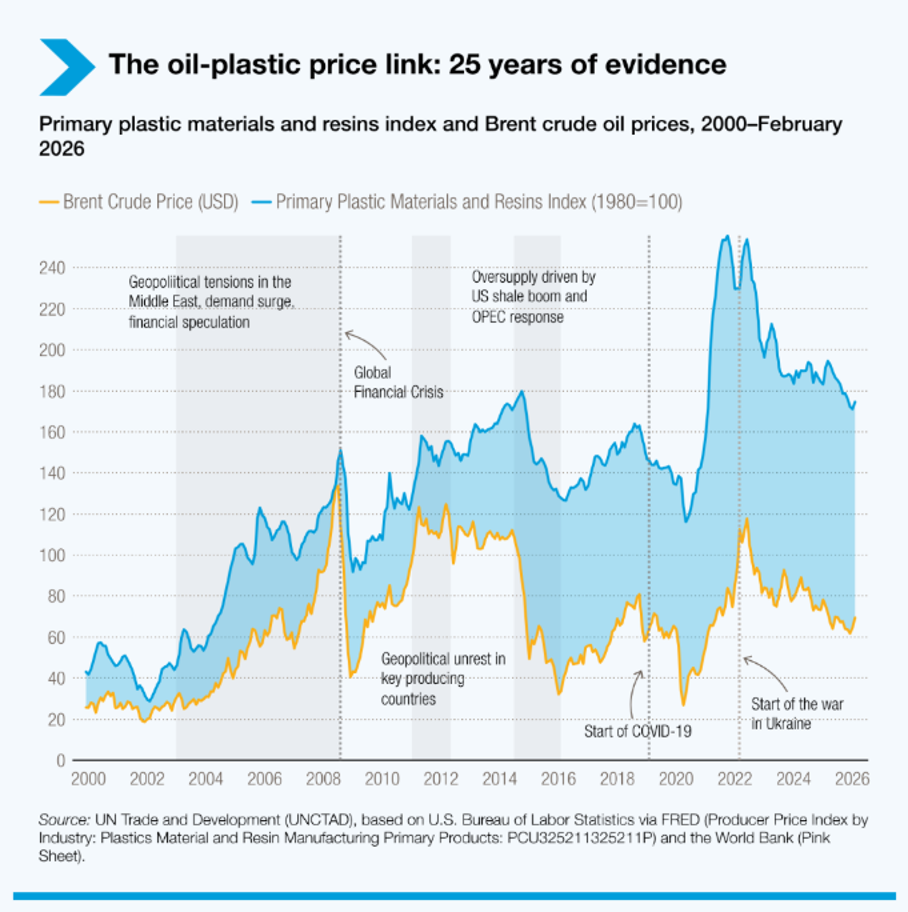
Plastics, made from fossil fuels, saw their prices rise. As an example, polyethylene resin, which is used in packaging, surged by around 70-80% in European spot markets between February and April 2026, as shown in the graph on the left. The pattern repeats across 25 years of geopolitical tensions and oil shocks, as shown in the graph on the right.
UNCTAD analysis shows tariffs on plastics have fallen to 7.2%, while natural substitutes (e.g., seaweed, pineapple and banana fibre) face 14.4% tariffs. Developing countries supply most of these materials but capture a limited share of these value chains, constraining deployment at scale.
RedGold and Darsh Industries, a Tanzanian manufacturer using plastic packaging material, is feeling the pressure directly. “Plastic packaging costs have spiked,” said CEO Balasaheb Gavane. “Through the UK-UNCTAD SMEP Programme, we have seen viable alternatives that promote resource efficiency and cleaner production; but without reliable supply, clear standards and competitive pricing, we cannot switch at scale.”
Gaps in national regulations and fragmented international standards, including in frameworks such as the Codex Alimentarius, raise compliance costs and create barriers to trade, particularly for smaller producers.
In 2023, plant fibre production reached 5.9 million MT, less than 5% of the 124 million MT global fibre market dominated by synthetic fibres. Analysis by Fibral Material Alliance finds that natural fibre substitutes and alternatives are held back by scalability constraints and an uneven regulatory environment rather than lack of growth potential.
Although demand for recycled synthetic textiles is increasing, supply chains remain insufficiently structured for efficient textile-to-textile recycling, since bottle-to-fiber recycling continues to be more widely practiced than true fiber-to-fiber recycling. said Dr. Muzzamal Hussain of the National Textile University of Pakistan.“Working with SMEP Programme, we are mapping textile waste flows in Pakistan to bring materials back into production, reducing reliance on virgin synthetics.”