

The lead acid battery is among the oldest and cheapest battery technologies available today which makes them very suitable for use in developing countries such as Bangladesh. In Bangladesh, the use of the lead acid battery is growing, driven by growth in the three-wheeler e-rickshaw and renewable energy generation sectors, in turn leading to a growing demand for refined lead to recondition batteries. Import taxes on battery imports contribute factor to the widespread use (and re-use) of poor quality batteries and lack of regulatory controls in the sector result in a small industry opportunity for the estimate 1000+ informal recyclers in the country. Smelting of battery lead parts takes place in open fire pits in the ground without any environmental protection, which results in direct lead exposure in the soil. Health and safety issues are numerous as lead is a potent neurotoxin and environmental contaminant and child labour is prevalent in the breaking, sorting and furnace-preparing activities. Children are also more susceptible to deleterious effects of lead pollution. As a result of this widespread practice, Bangladesh is one of the countries most affected by lead pollution worldwide. Initial SMEP-funded stakeholder outreach and consultations have confirmed public sector concern regarding both the seriousness of the threat to the environment and public health as well as the substantial challenges which need to be overcome to reform the battery manufacturing and recycling industry in Bangladesh to address these issues. (Refer to a synopsis on this issue undertaken by Pure Earth in 2021).
SMEP is supporting Pure Earth, who are working in close collaboration with Georgetown University and the Bangladesh University of Engineering and Technology, with research funding to better understand the underlying factors contributing to the widespread use of low quality batteries over more energy efficient options and to identify solutions to address this problem.
The SMEP funding enables the delivery of empirical research and testing of a business model and micro-finance solutions that will enable a more efficient battery return and recycling model and divert battery recycling from the informal sector to the formal sector. Ultimately the objective is to also encourage policy and regulatory shifts that support the stronger uptake of better quality lead batteries and high-quality lithium (Li) batteries. The researchers will be testing a business model amongst the garages that rent out the 3-wheeler easy bikes – a primary user group of the lead batteries – and vehicle owners. The model is designed to encourage the uptake of good quality batteries, promote practices to ensure better battery lifespan and strengthen formal buy-back systems. The business model is to be tested through randomised control trials and will be supported by a model for policy interventions.
For successful uptake, the business model would require policy support and dialogues with relevant government departments.
To achieve the objectives of the project, the following phases of work are planned:
Once user and business willingness to work with this system is tested, a policy brief will be developed to inform engagement with relevant ministries.
Photo Credit: PureEarth
Recent Developments and Emerging Findings (June 2026)
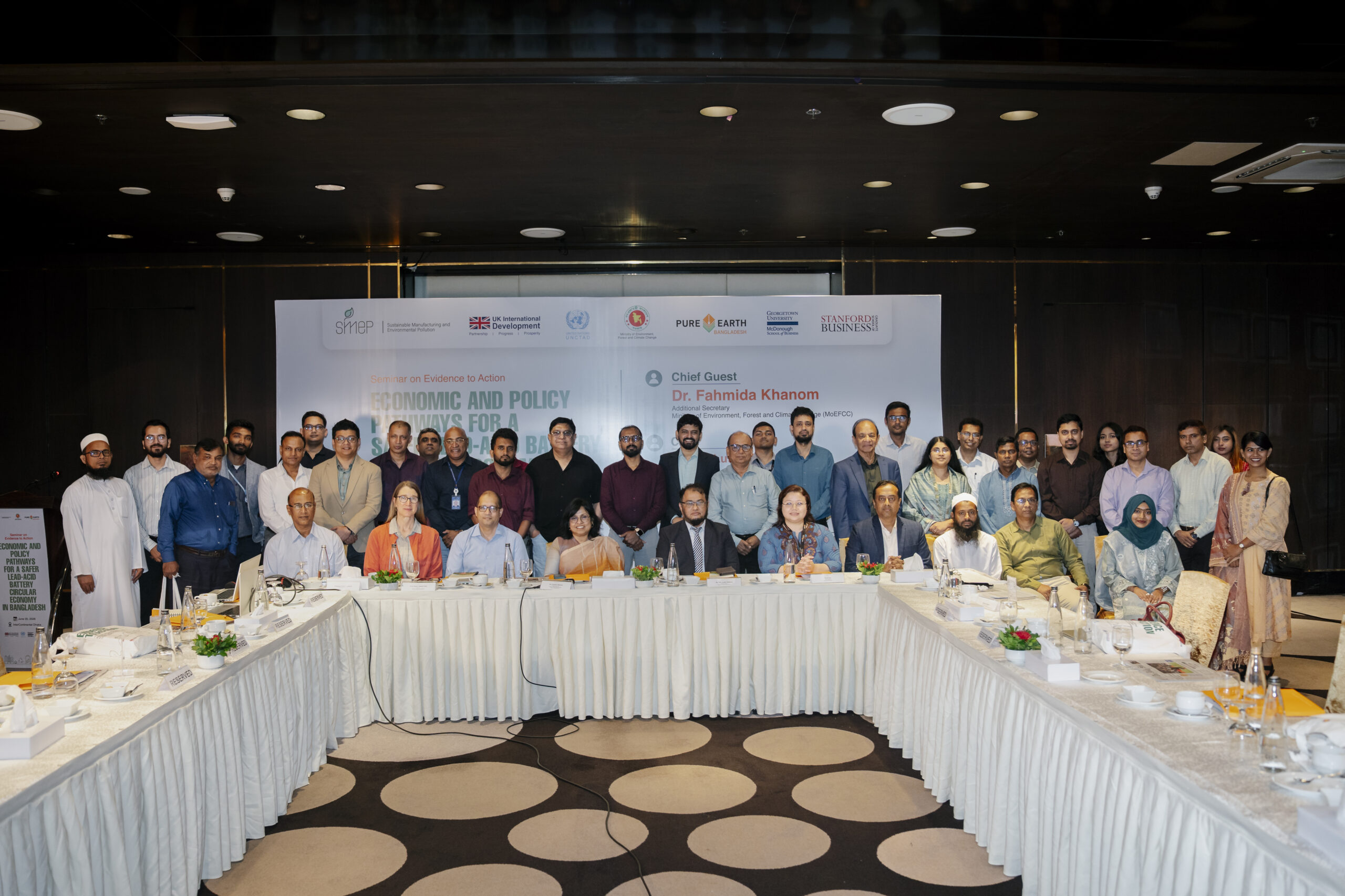
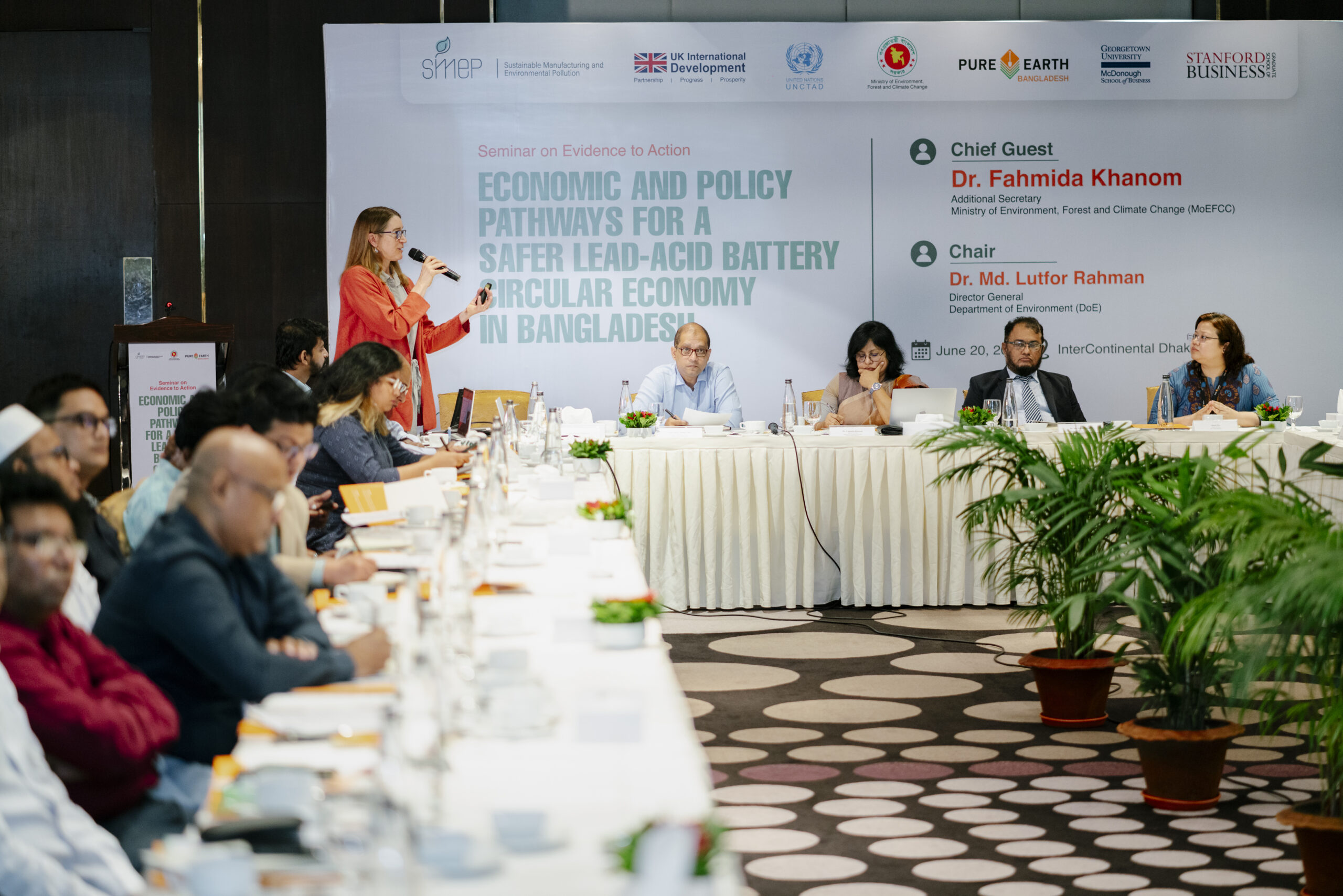
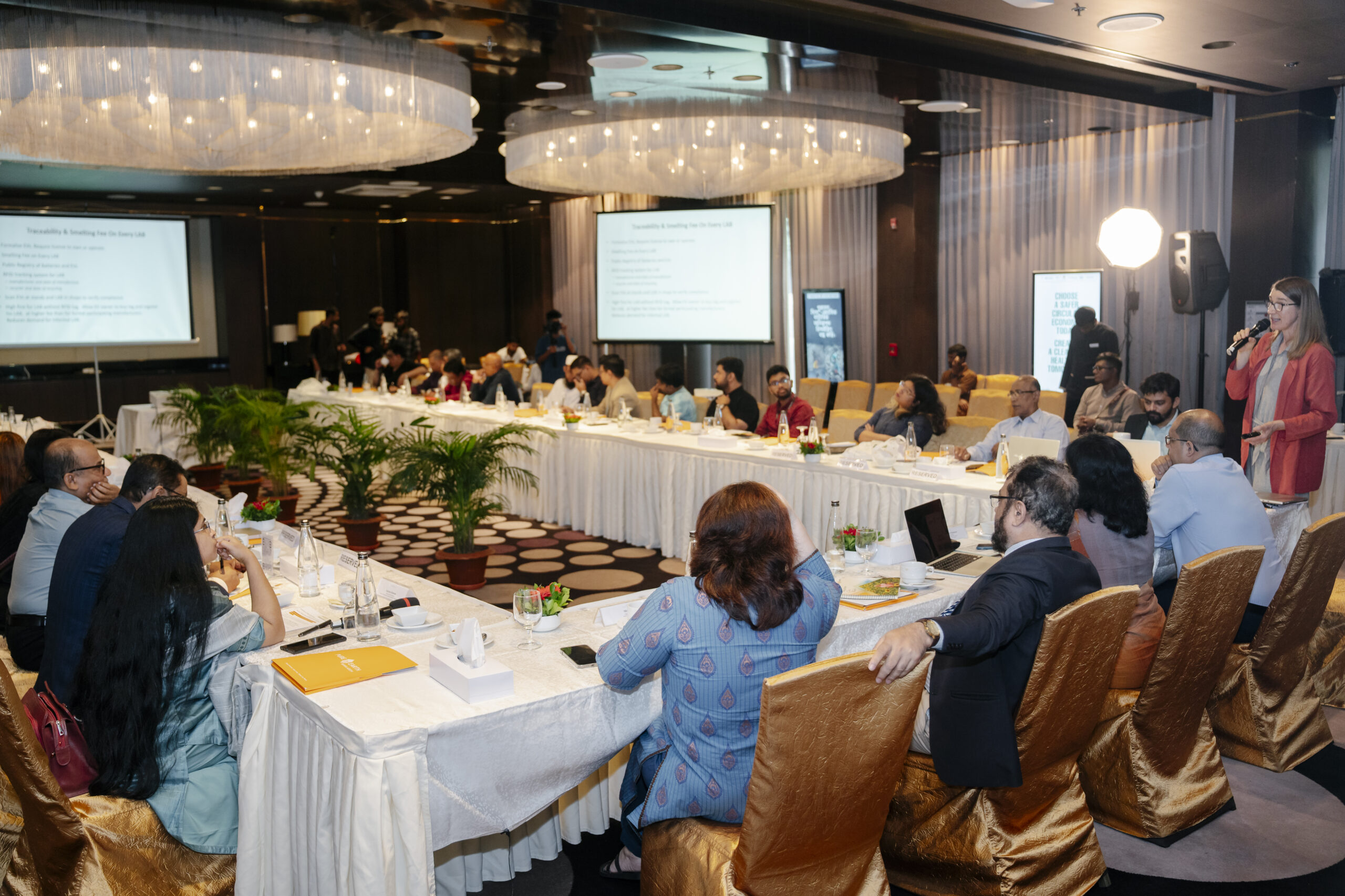
The project’s final dissemination seminar was held in Dhaka on 20 June 2026, bringing together more than 40 representatives from government, industry, academia, civil society and development organisations. Participants included senior representatives from the Ministry of Environment, Forest and Climate Change (MoEFCC), Ministry of Industries, National Board of Revenue (NBR), Bangladesh Standards and Testing Institution (BSTI), Department of Environment (DoE), Directorate General of Health Services (DGHS), Institute of Epidemiology, Disease Control and Research (IEDCR), Bangladesh Road Transport Authority (BRTA), ILO, ADB, BRAC, industry associations and battery sector stakeholders.
Research presented through the project highlighted the complex relationship between trade policy, battery quality, recycling systems, lead pollution and public health outcomes. New analysis explored how battery import restrictions may have influenced domestic battery manufacturing, battery replacement rates, recycling activity and associated lead emissions, contributing important evidence to ongoing policy discussions on industrial development, circular economy strategies and environmental health.
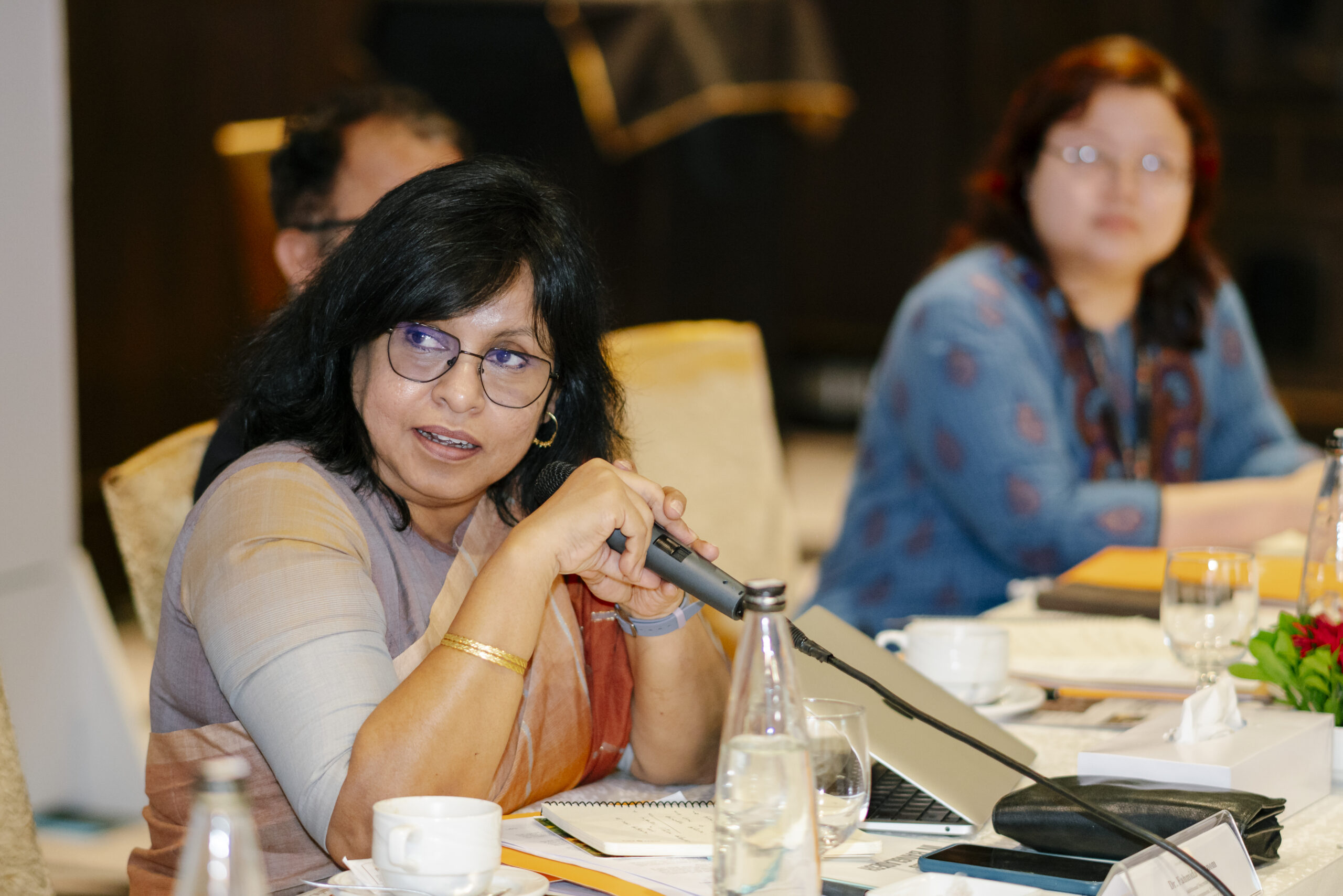
The seminar generated extensive discussion on potential policy responses, including improvements to battery quality standards, traceability systems, formal recycling capacity, environmental regulation and market incentives. The Ministry of Environment, Forest and Climate Change expressed strong interest in the findings and requested a policy brief to support further consideration of the recommendations.
Project findings also received national media coverage through Bangladesh’s leading newspaper, The Daily Star, helping to broaden public awareness of the environmental and public health challenges associated with informal recycling of used lead-acid batteries and potential pathways toward safer and more sustainable battery value chains.
Key achievements include:
The project has strengthened understanding of how trade policy, product quality, recycling systems and environmental health outcomes interact within Bangladesh’s lead-acid battery value chain, providing evidence to inform future regulatory and industrial policy discussions.
The ULAB Feasibility Assessment provides an overview and rationale on the business models that will be piloted in Bangladesh: Feasibility Assessment of the Proposed Business Model Innovation, May 2023
SMEP Workshop titled “Working with the Battery Industry on Solutions for Quality, Sustainability, and Market Access” Press Note: Consortium of Industry, Academics, NGOs, and International Development Agencies Come Together Seeking Solutions to Electric Vehicle Battery Life-Cycle Challenges and Reduce Lead Pollution
SMEP Workshop titled “Unified Policies and Healthier Journeys” Press Note: Formalize Electric Three-Wheeler Sector: Regulating for Growth, Preventing Lead Pollution, and Unlocking Green Investment -Stakeholders’ Policy Suggestions in an E-Mobility Workshop
Factsheet: Rapid e-mobility transition, lead poisoning, and Market & Policy Opportunities
Policy Recommendations: 8-point policy recommendations for three-wheeler vehicles and their batteries
News coverages:
UNCTAD Tradecast: Poisoned Power: Why lead-acid batteries need a cleaner and greener alternative
UNCTAD Report: Battery Value Chains: The challenges for e-mobility in South Asia
Resources from the project’s final dissemination seminar was held in Dhaka on 20 June 2026:
Journal Article: Barrier to Import Batteries and Lead Poisoning in Bangladesh