Barrier to Import Batteries and Lead Poisoning in Bangladesh
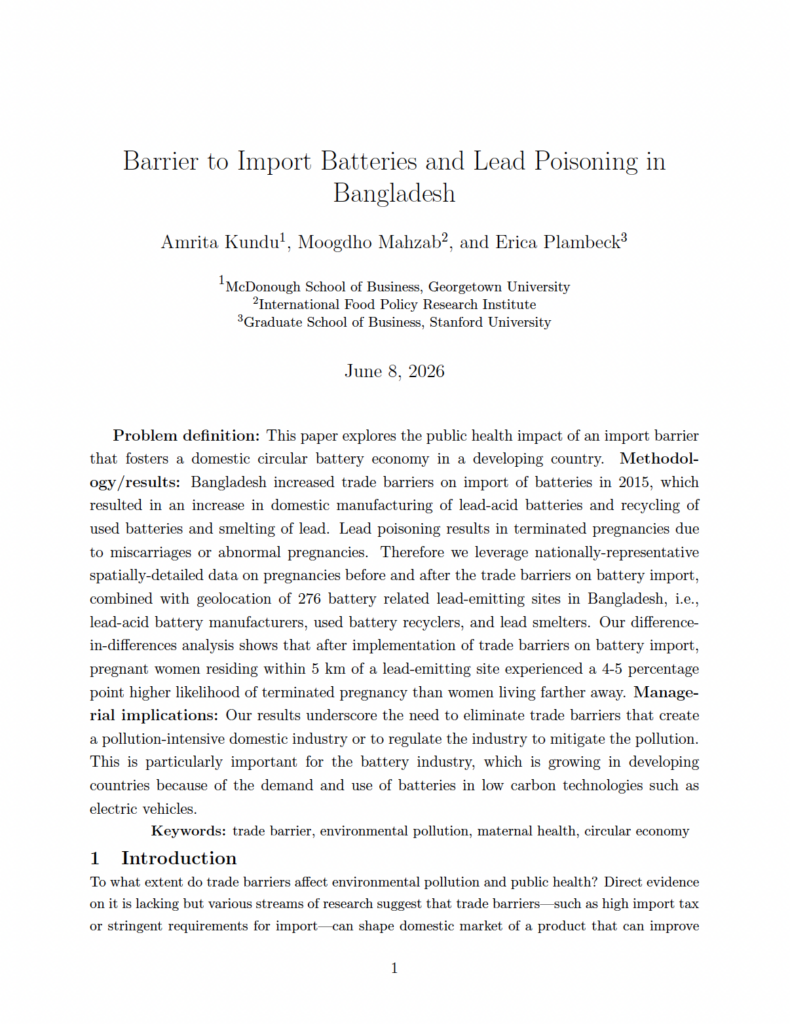
The paper Barrier to Import Batteries and Lead Poisoning in Bangladesh examines the unintended consequences of battery import restrictions introduced in Bangladesh in 2015. The research argues that policies designed to support domestic industry and expand local manufacturing may also have contributed to increased lead pollution and adverse public health outcomes.
The SMEP-funded study was led by researchers from Georgetown University and Stanford University and analysed nationally representative maternal health data alongside the locations of 276 battery-related lead-emitting sites, including battery manufacturing facilities, used battery recyclers and lead smelters across Bangladesh. According to the findings, women living within five kilometres of battery-related lead-emitting facilities experienced a 4-5 percentage point increase in the likelihood of terminated pregnancies following implementation of battery import restrictions.