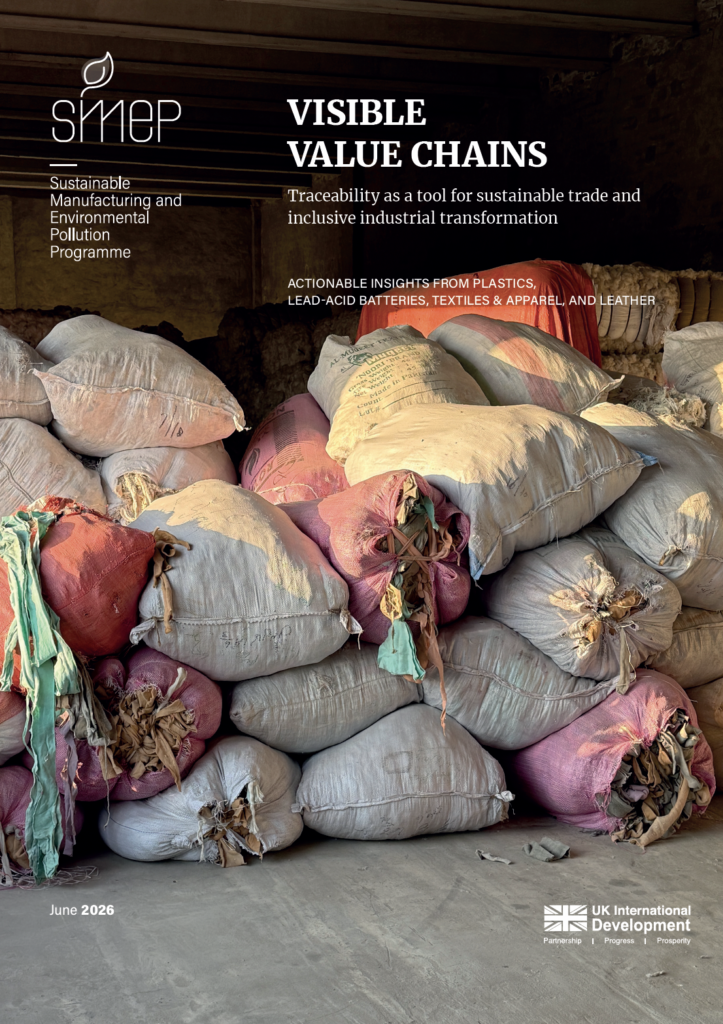
Traceability as a tool for sustainable trade and inclusive industrial transformation
As regulatory standards increasingly shape global trade, the ability to verify how and where a product was made is becoming a prerequisite for market access. In this context, traceability – the ability to track and verify product-related information across supply chains – has emerged as a critical tool with multiple applications, from ensuring food safety in the agricultural sector to preventing the illicit trade of hazardous chemicals. It is also the primary mechanism for verifying sustainability claims.
This report, produced under the Sustainable Manufacturing and Environmental Pollution (SMEP) Programme, examines these challenges from a trade and development perspective. Relying on an integrated methodological framework that situates firm-level actions within sustainability megatrends, the study addresses a fundamental question: how can developing country producers navigate increasingly stringent traceability requirements without being marginalized in the sustainability transition?
Share this:
Date
June 2026
Author
Lorenzo Formenti (UNCTAD), Elzette Henshilwood (SouthSouthNorth) and Mahesh Sugathan (UNCTAD)