Sustainable Manufacturing and Environmental Pollution Programme

Innovative Water Recycling Project Tackles Bangladesh’s Textile Industry Pollution

A SMEP-funded pilot project in Bangladesh is combining wastewater treatment technology with an innovative financing model to address one of the textile industry’s most pressing environmental challenges: water pollution. A short technical webinar was hosted earlier in February 2026 by the project team to present pilot outcomes to industry stakeholders. 

The Technical Breakthrough

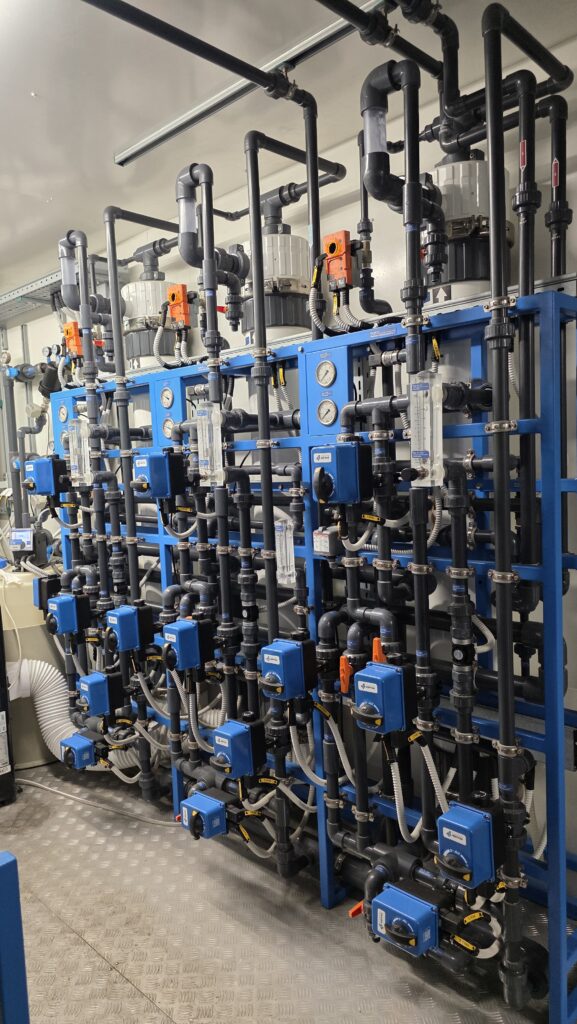
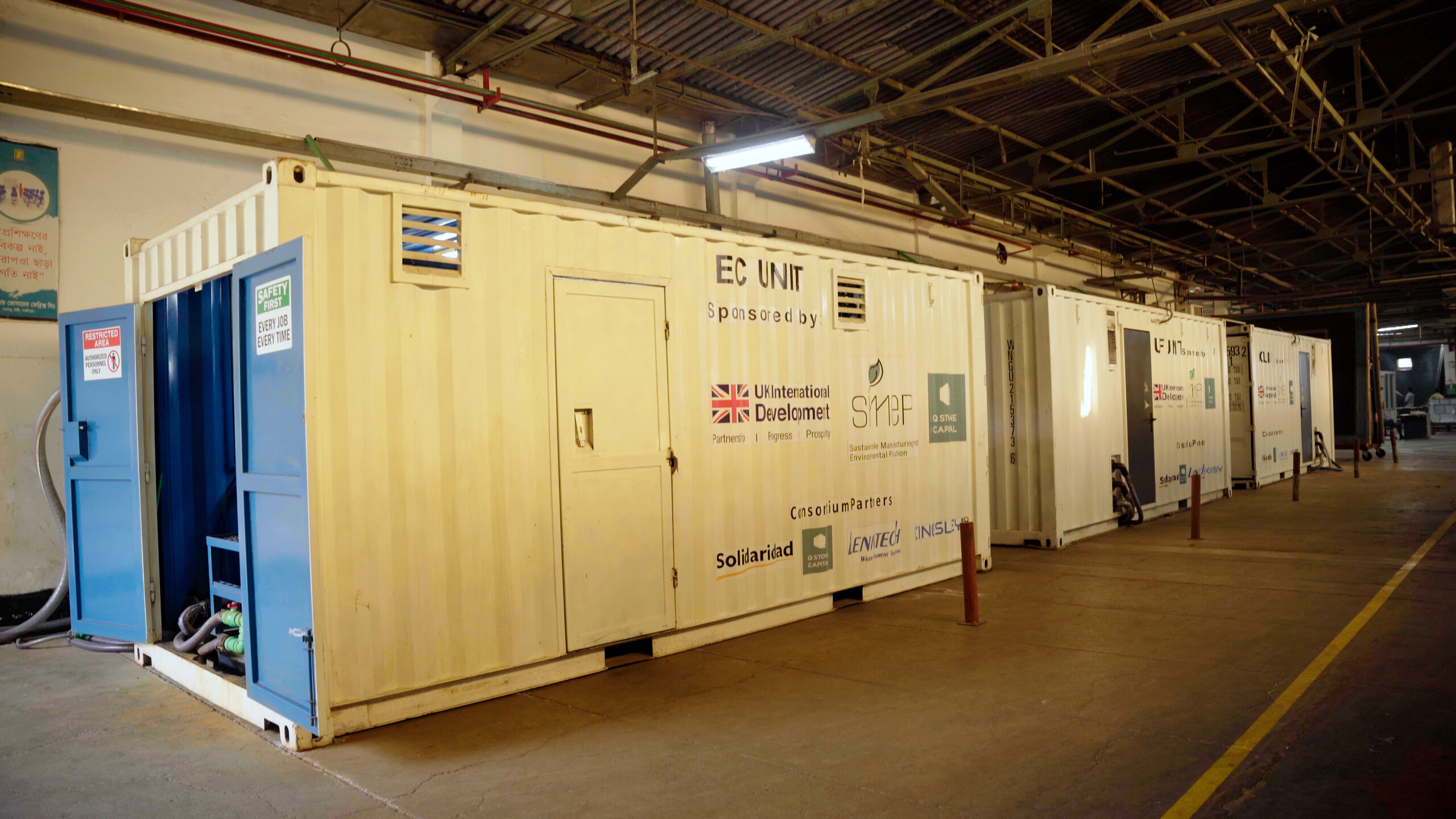
The project, led by Solidaridad Network Asia and QStone Capital BV, has deployed a modular 5m3/hr pilot plant, designed by Lenntech Water Solutions (the project’s Technical Solution, Design and Manufacturing Partner) and installed by Kingsley Engineering Services Corporation (the project’s Technical Installation Partner), and capable of recycling up to 85% of textile wastewater at a vertically integrated textiles mill in Dhaka, Zaber & Zubair Fabrics Ltd. The modular system uses a three-stage approach: i) ultrafiltration, ii) dual reverse osmosis, and iii) advanced oxidation processes to treat and recycle water. “From a technical perspective, the challenging part isn’t recycling the water—it’s managing the concentrated residual wastewater, referred to as brine,” explains Mr Rajib from Kingsley, who led a technical presentation. The team has developed solutions for three distinct textile segments: neat and open dyeing factories (the most challenging), denim washing facilities, and sweater washing operations. 

Operational costs, for 70% recycling and 30% brine management, range from $0.12to $0.30 per cubic meter of recycled water, with capital investment of $0.9 to 2.0 million for a 100 m3/hr plant.  Having successfully completed trials at Zaber & Zubair fabrics, the modular and mobile pilot wastewater treatment unit will be moved to a denim washing facility, Designer Fashion (Bengal Group). The project team will then combine the pilot performance data from the two facilities, each with its own distinct wastewater characteristics, to develop a technical report evaluating the effectiveness of the technology. Keep an eye out for news on the release of this on our website.  

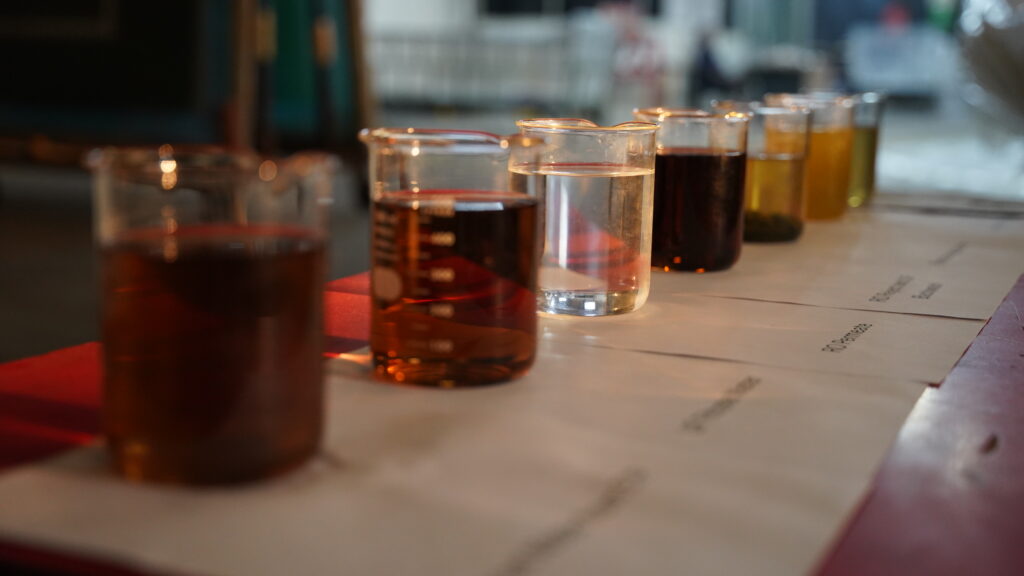
Water samples taken from different stages in the treatment process in front of RO container
The ultrafiltration unit
Electro-coagulation, ultrafiltration and reverse osmosis containers
Water samples taken from different stages in the treatment process

The Financing Innovation

A novel aspect of the pilot may be its proposed financing mechanism – a model based on the carbon credit concept, but for water. Developed by consortium partner, Q Stone Capital, the model comprises a two-pronged approach 

  • The application of a 1% consumer surcharge on retail garment purchases that carry the label indicating the garment as produced using water-efficient and pollution avoidance measures,  
  • combined with verified proof of avoided water pollution at the factory source, issued as blockchain-based digital certificates (water credits / tokens).    

Jeroen Tielman, CEO of QStone Capital, explains that in this model, the 1% surcharge would be collected directly from buyers at retail checkout on a voluntary opt-in basis, similar to choosing to purchase a bag at the till – thus creating a bridge between consumers and factories. The proceeds of this surcharge would flow into an independent foundation/fund that could (partly) subsidises factories’ transition to zero liquid discharge systems. QStone calculates that, in Bangladesh alone, this could generate up to USD 700 million annually1. According to QStone, sample consumer surveys conducted across Europe and Australia show buyers are willing to pay 3-4% extra for sustainable production, which indicates that the 1% threshold might be feasible. 

Transparent Accountably

The model ensures transparent reporting at the factory end, in verifying the volumes of wastewater treated and reused (to legitimise the sustainability claim) and in turn creating a transparent bridge between factories, brands and consumers. 

The level of verification and security will be done through Internet-of-Things sensors installed throughout the treatment process automatically generate tamper-proof digital certificates, termed Avoidance of Water Pollution Tokens. These tokens provide digital verification that wastewater has been treated and reused rather than discharged. These blockchain-based certificates would then be traded, allowing factories to pay back loans, fashion brands to offset their water footprint, and institutional investors to support sustainable production. QStone is now seeking partnerships with major fashion brands and financial institutions to scale the solution, for Bangladesh and potentially beyond, noting that: 

"The beauty of this system is it provides transparent, independently verified proof of sustainability without interfering with existing business relationships between brands and factories"

Jeroen Tielman
CEO, QStone Capital

Looking Ahead

The modular advanced wastewater treatment pilot demonstrates that:

  • 70–80% wastewater recycling is technically viable across major textile segments in Bangladesh,
  • Compliance with local water discharge regulations and international standards (such as with Zero-Discharge of Hazardous Chemicals [ZDHC] parameters under their Foundational and Progressive levels),
  • Cost varies significantly by type of textile manufacturing (as it delivers wastewater with different compositions and pollution loads),
  • Full zero-liquid discharge (and resultant salt recovery) is achievable but currently expensive under conventional evaporation-based systems (mostly due to higher energy demands), and
  • Innovation in brine concentration and salt recovery could materially reduce both CAPEX and OPEX.

The next phase of piloting will determine whether multi-membrane brine management can provide a commercially scalable pathway to near-zero discharge without thermal evaporation, further reducing costs and environmental impact. With results from the current denim washing pilot expected within a month, the project represents a potential blueprint for sustainable textile production worldwide, where consumers, brands, factories, and investors all share responsibility for protecting vital water resources.

Water Bankruptcy – A Crisis Reaching Breaking Point

The timing of this initiative couldn’t be more critical. Global water scarcity has reached crisis levels, with experts warning of impending “water bankruptcy” in regions heavily reliant on textile manufacturing. Countries like Bangladesh, India, Pakistan, and China, which collectively produce the majority of the world’s garments, are experiencing severe water stress that threatens both their industries and the survival of local communities. Textiles manufacturing is notoriously water-intensive with high pollution load. The dyeing and finishing processes alone account for 20% of global industrial water pollution!2 Untreated textiles wastewater carries toxic dyes, heavy metals, and chemicals which lead to contamination of rivers, groundwater, and agricultural land. This is particularly pertinent to Bangladesh, where the ready-made garment sector accounts for over 80% of export earnings3. Studies and government monitoring show that rivers such as the Buriganga, Turag, Shitalakkhya, Balu, and Dhaleshwari receive large volumes of untreated or inadequately treated textile effluent, with biochemical oxygen demand (BOD), chemical oxygen demand (COD), heavy metals (e.g. chromium, cadmium, arsenic), and toxic chemicals far exceeding national and World Health Organization standards, rendering water undrinkable and destroying aquatic ecosystems4. This pattern aligns with what current water-risk literature describes as “water bankruptcy” due to “quantity failure”, (where groundwater extraction consistently exceeds natural recharge leading to a declining water table and “quality failure”, where aquatic systems and rivers lose their assimilative capacity due to chronic discharge of untreated or poorly treated effluent, making water economically and biologically unusable. 

The situation in Bangladesh mirrors crises in other major textile-producing regions, where communities face the stark choice between economic survival and access to clean water. Without immediate intervention, these regions risk environmental collapse that would devastate both local populations and global supply chains. 

Yet this trajectory is not inevitable. Emerging waterreuse technologies, such as the SMEPfunded ZLD pilot, offer a practical way to cut pollution at the source while giving factories a pathway to recover some of their capital investment and manage the transition more sustainably. With coordinated action across the supply chain, regions like Bangladesh can start to reduce pressure on their waterways, support local communities, and move toward a more resilient textile sector. The solutions are within reach; what matters now is collective followthrough. 

Picture of Amanda Dinan

Amanda Dinan

with inputs from Elzette Henshilwood and the project team

Scroll to Top