The SMEP-funded project, the Green Tannery Initiative, has demonstrated that Ethiopia’s leather industry can convert its solid waste into high-value organic fertiliser – creating a profitable and sustainable circular economy model – by piloting enzymatic unhairing and solid waste valorisation technologies. Ethiopia is globally recognised for its superior leather quality, particularly that of highland sheep, and this initiative presents a significant opportunity to “green” the value chain and address the large pollution loads generated through the production processes. The project team has shown the viability of practices that are more environmentally friendly, circular, and safer for workers, enabling more competitive positioning of Ethiopia’s leather sector in the global arena.
The Green Tannery Initiative is led by the renowned CSIR Central Leather Research Institute in India and implemented in Ethiopia together with Ethiopia’s Manufacturing Industry Development Institute – Leather and Leather Products Industry Research and Development Centre (MIDI-LLPIRDC), with support from the United Nations International Development Organisation (UNIDO). The project addresses three of the sector’s biggest problems:
The use of sodium-sulphide, a hazardous chemical, in the initial hide preparation and unhairing process. Sodium sulphide releases toxic hydrogen sulphide gas, posing a serious health hazard to workers in beamhouse operations. It is also a major contributor to sulphide-rich effluent, which is corrosive, depletes oxygen, and is highly toxic to aquatic life.
The generation of polluted wastewater from high organic and chemical loads from the tanning process, and
Poor solid waste management: disposed of primarily in landfills, the protein- and fat-rich fleshings degrade rapidly, releasing methane, harbouring pathogens and creating odour and overloading landfills and wastewater with organic contaminants.
SMEP’s last grantee visit of the year took a small SMEP team to bustling Addis Ababa, Ethiopia, to see this project in action. During this project visit, the Green Tannery Initiative successfully demonstrated to Ethiopian tanners that an enzyme-based unhairing method can replace the conventional reliance on sodium sulphide. An added advantage of the enzymatic-unhairing method is that the hair remains largely intact and can be easily recovered. This contrasts with the conventional sulphide process, which reduces the hair to a pulp that mixes with effluent wastewater, making hair recovery virtually impossible and increasing wastewater pollution loads.
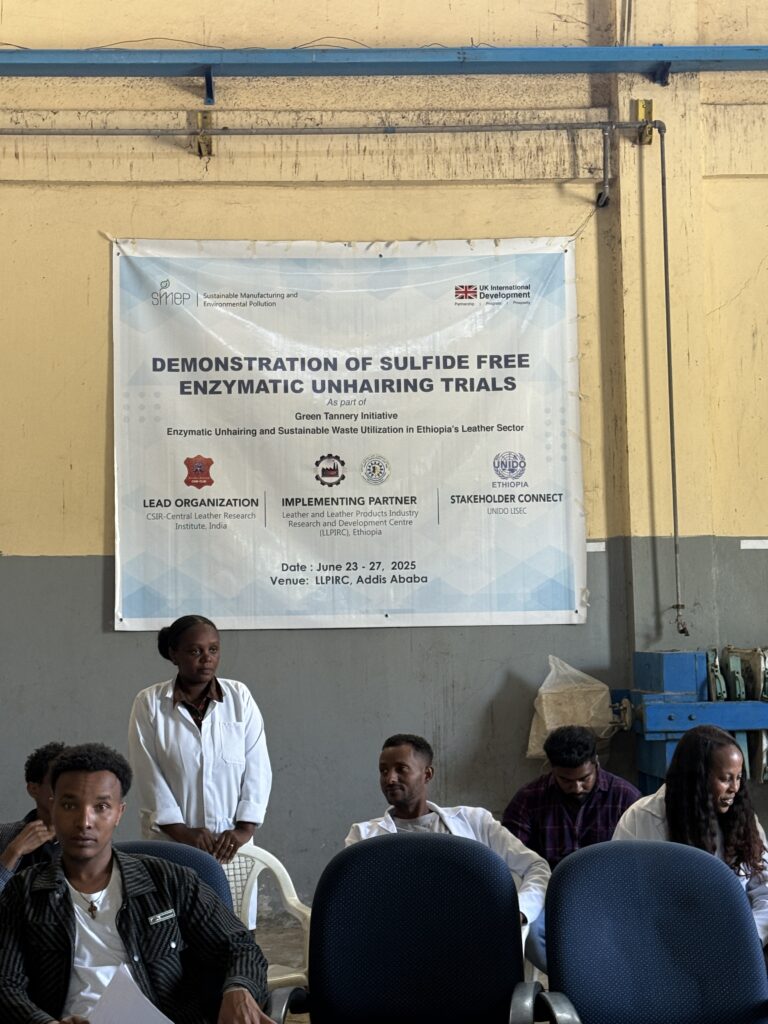
Demonstration of the sulphide-free enzymatic unhairing trials taking place at tanneries in Ethiopia in June 2025
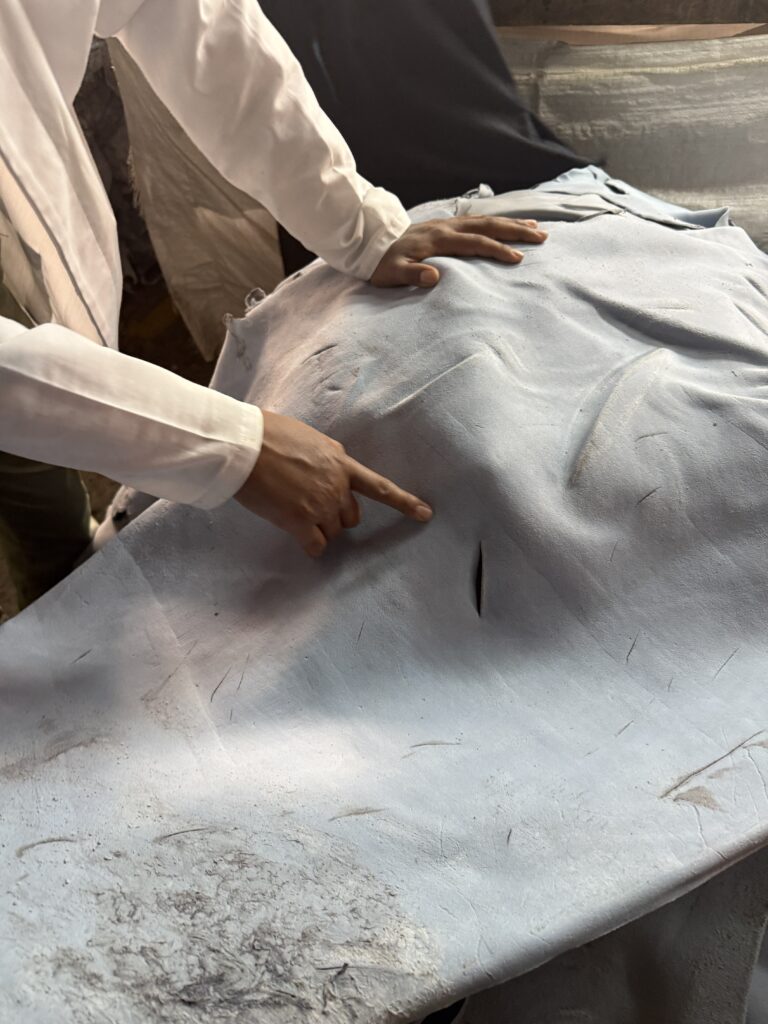
The trials showed that enzymatic unhairing retained the quality of the leather on par with the sulphide method
This organic waste together with raw trimmings and fleshings (leftover skin/flesh normally removed after unhairing) now provide a unique opportunity for waste valorisation as the ‘waste’ is a rich source of uncontaminated fats, protein and keratin. The project team has applied and demonstrated a patented hydrolysis process to these waste streams for the first time in Ethiopia, converting them to biofertilisers – and the SMEP team was on site to observe the technology demonstration trials first-hand. The value-add potential for the industry is substantial given the large volumes of organic matter involved.
A series of active in-situ pilots, implemented at several tanners, have been a vitally important part of the project delivery to trial the application on the enzymes in factory context. While shifting from sulphide to an enzymatic-based substitute is a staged process, local tanners included in the trials have confirmed that the process works, and that the leather quality that is achieved is steadily improving.
At a stakeholder meeting that was held 6 December 2025 in Addis Ababa, several tanners highlighted the unique opportunity to adopt the sulphide-free tanning approach in the industry more widely, noting the benefits for their operations relating to reduced occupational health and safety risks and well as reduced pollution loading in wastewater. Significantly, tanners expressed keen willingness to continue contributing to trials and evidence generation so that enzymatic unhairing can become a viable, competitive, and sustainable alternative for the Ethiopian leather industry, increasing the sector’s relevance to global markets. The tanners recognised that global markets are increasingly rewarding sustainably processed products. Leather produced with reduced chemical use and stronger environmental practices can earn certifications that substantially boost its export value.
As Ethiopia moves from least-developed to middle-income status, strengthening export competitiveness becomes essential. Integrating sustainability certification into the country’s leather-sector development strategy is therefore a strategic priority.
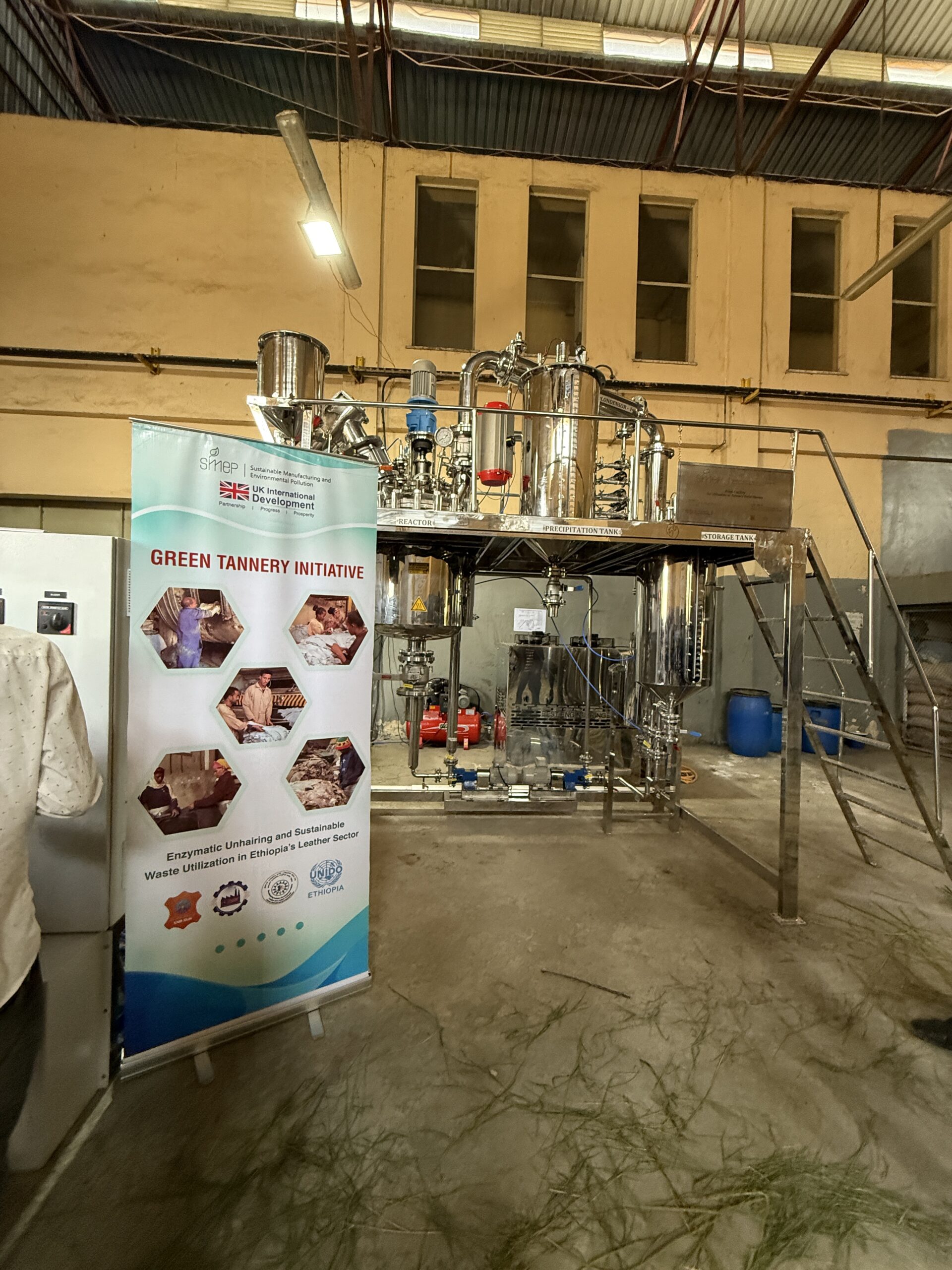
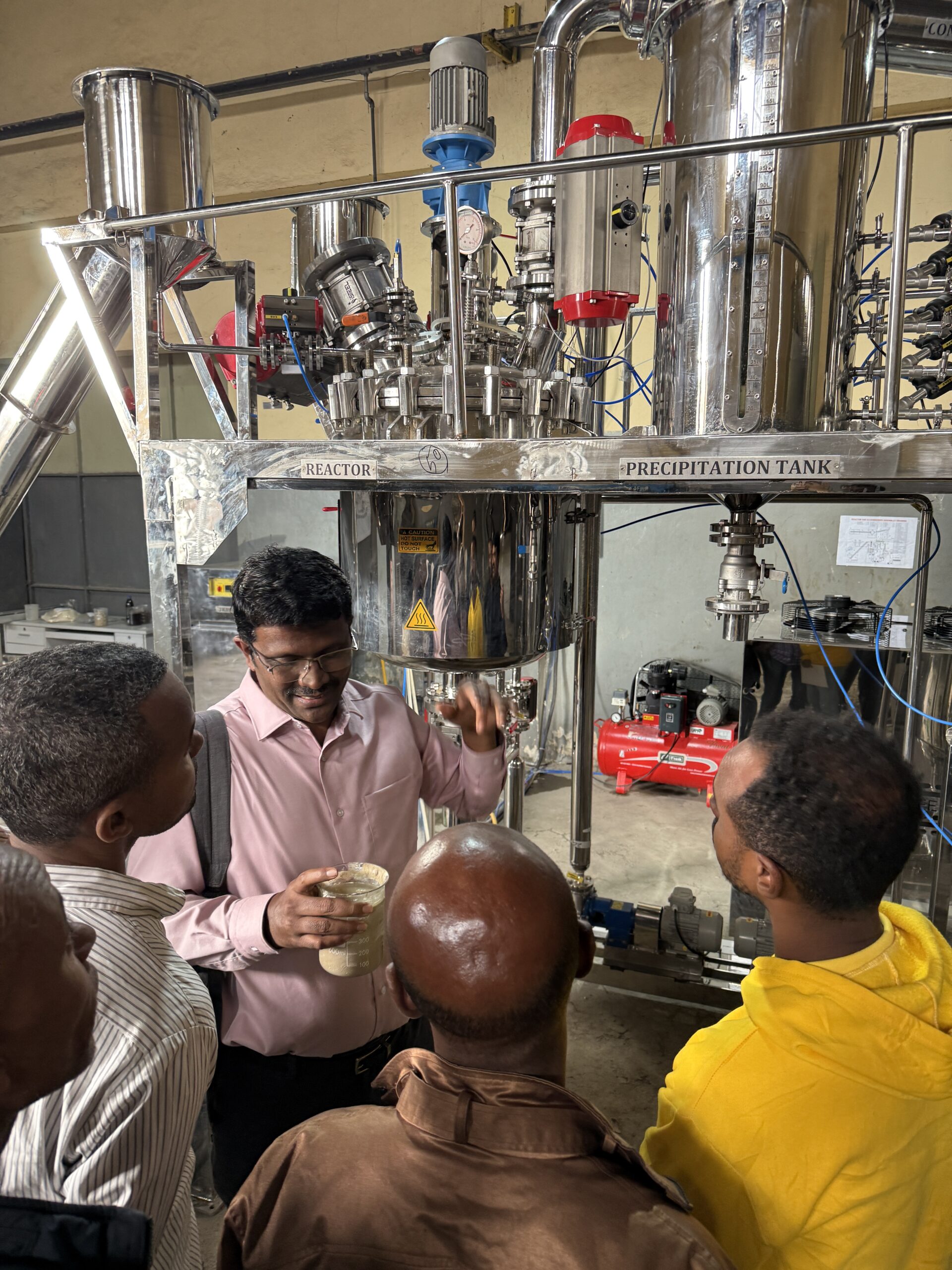
The patented hydrolysis technology being trialed in Ethiopia to valorise hair, trimmings and fleshing waste
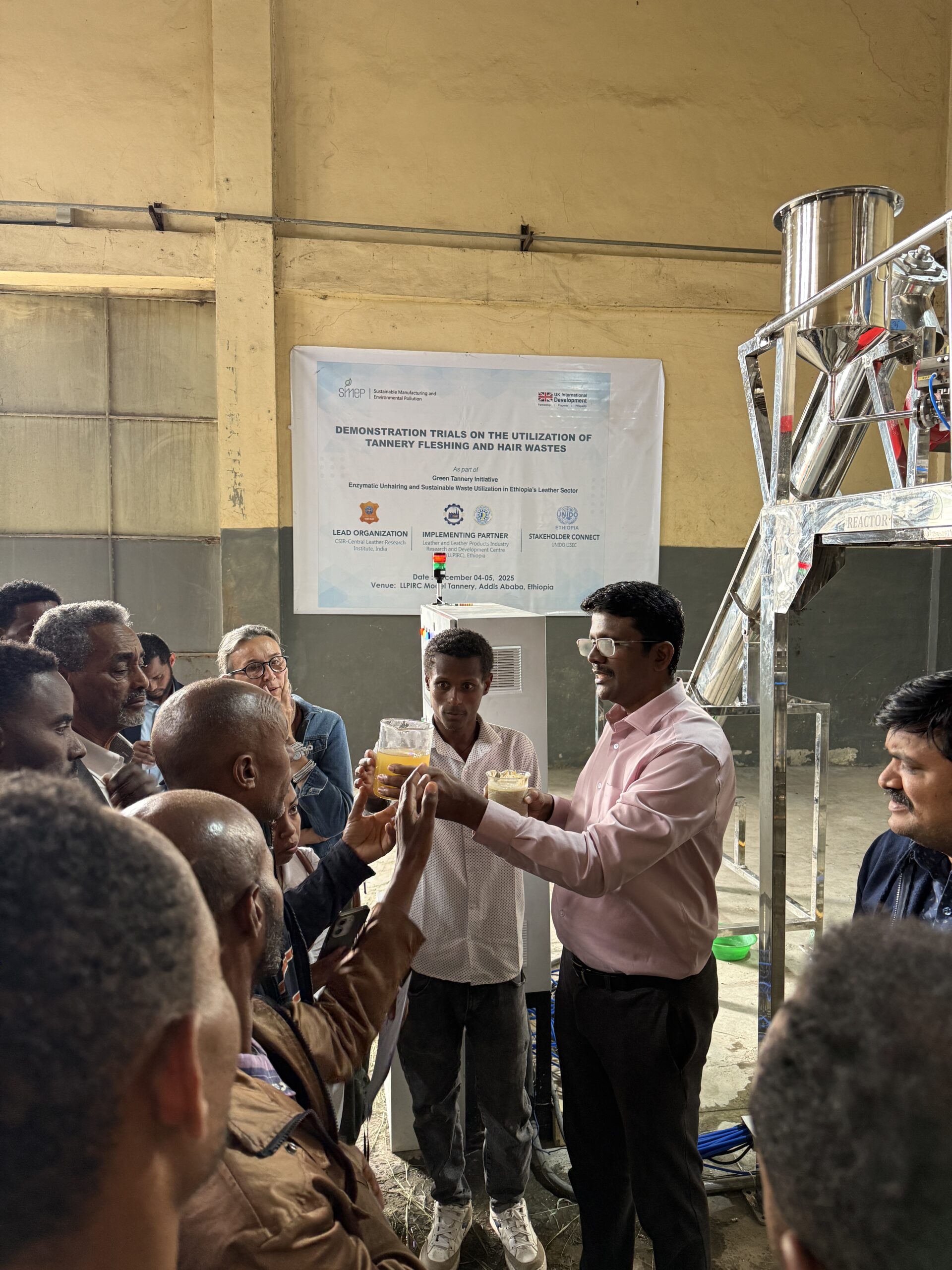
Dr Madhan (CSIR-CLRI) demonstrating to tanners the by-products from the process
Dr Madhan (CSIR-CLRI) demonstrating to tanners the by-products from the process
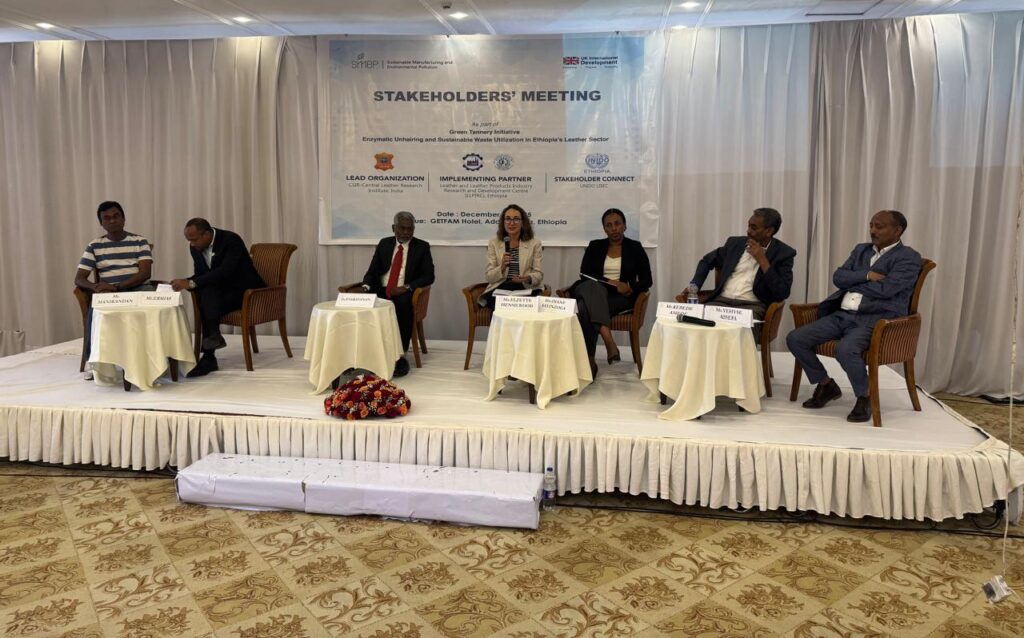
The high level stakeholder meeting, brought together policymakers, tanneries, academia, development partners and industry stakeholders, where the project team presented key initial project findings (techno-economic viability of the solutions) and facilitated two panel discussions around the adoption of the cleaner circular production options by the Ethiopian leather industry and as a green industry standard in general.
His Excellency Anil Kumar Rai, Ambassador of India to Ethiopia, and His Excellency Melaku Alebel, Minister of Industry, Government of Ethiopia, attended this event as Chief Guests. The Ambassador encouraged the project team to showcase these solutions at the UNFCCC COP gathering scheduled to take place in Addis Ababa in 2027. This is an exciting opportunity, particularly as the team estimates that utilising the recovered hair alone (approximately as 6,000 tons per year in Ethiopia) could reduce emissions by around 7,500 tonnes CO₂e annually.
One of the panels at the 6 December stakeholder meeting held in Addis Ababa discussing cleaner production in Ethiopia's leather industry, including SMEP's Elzette Henshilwood and other key stakeholders
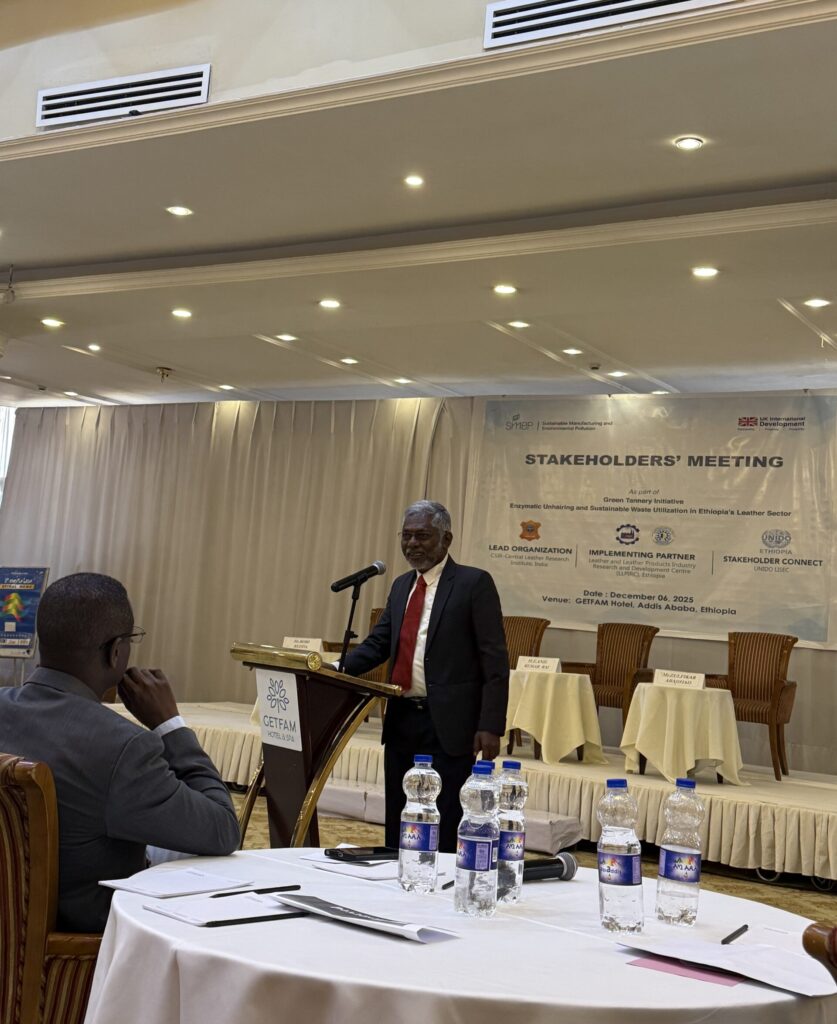
Dr Saravanan presenting project findings at the stakeholder meeting
Ethiopia’s flagship plan to create a modern, integrated leather-processing cluster at Modjo City presents a major opportunity to deploy the project’s waste-to-value solutions at scale. By centralising production, waste handling, and environmental services, Modjo Leather City offers the ideal platform to introduce enzyme-based unhairing and circular waste management technologies across multiple tanneries simultaneously. This provides economies of scale, lowers individual investment burdens, and ensures consistent environmental compliance. Importantly, a centralised system allows the large volumes of hair and fleshings generated daily to be channelled into shared valorisation facilities, such as organic fertiliser production or biogas generation. Instead of being dumped and generating methane, these wastes become inputs for new revenue-generating industries aligned with Ethiopia’s green manufacturing vision. In this way, Modjo Leather City has the potential to be, not only a hub for leather production, but also a model for climate-aligned industrial development and circular economy innovation in Africa.
Through the partnership between CSIR-CLRI, LIDI/LLPRC, the Ministry of Industry, and UNIDO, expertise, technology, and practical know-how are being transferred between two rapidly growing economies. The project has built on a long-standing history of collaboration and showcases how innovation from the Global South can drive industrial modernisation, create new business opportunities, and support climate-aligned growth.
Elzette Henshilwood
SMEP Portfolio Manager: Textiles and Tanneries
With inputs from Amanda Dinan and Staci Warrington