
Sustainable Manufacturing and Environmental Pollution Programme

Ethiopia

SMEP grantees make their mark at the 3rd Africa Waste is Wealth Summit

The third edition of the Africa Waste is Wealth Summit (AWWS III), held in June 2026, brought together a broad cross-section of stakeholders from across Africa – government agencies, private sector actors, UN bodies, financiers, researchers, and innovators – united by a common agenda: transforming waste from a problem into an economic and environmental opportunity.
Read More »

Development of Protein Binder from Tannery Waste for Leather Finishing

Development of Protein Binder from Tannery Waste for Leather Finishing The leather industry possesses a prominent place in the fashion industry. However, waste management during leather manufacture is a limiting factor to attaining sustainability by the industry. Tannery hair waste (byproduct of enzymatic dehairing), being a rich source of keratin, remains underutilised. Casein binders are

Read More »

The Green Tannery Initiative: Towards positioning Ethiopia’s leather sector in the global arena

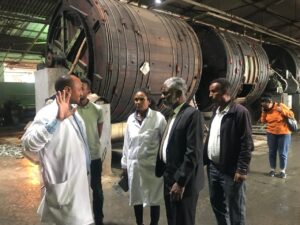
The SMEP-funded project, the Green Tannery Initiative, has demonstrated that Ethiopia’s leather industry can convert its solid waste into high-value organic fertiliser – creating a profitable and sustainable circular economy model – by piloting enzymatic unhairing and solid waste valorisation technologies. Ethiopia is globally recognised for its superior leather quality, particularly that of highland sheep,

Read More »

The Green Tannery Initiative: Baseline Survey Report

The Green Tannery Initiative Baseline Survey Report This report serves as a critical deliverable of Work Package 1 (WP1) for the Sustainable Management of Emerging Pollution (SMEP) project. Its primary aim is to provide a comprehensive overview of the current status of the selected Ethiopian leather industry on key areas, including production and operational data,

Read More »

Innovation beyond high-tech: Traceability for resilience and fair trade in the Global South

As commodity‑reliant economies face growing demand for environmental and labour accountability, SMEs are combining traditional practices with adapted traceability solutions that fit local realities, helping them meet global trade rules, strengthen market access and protect livelihoods. At a tannery in Addis Ababa, Ethiopian and Indian project researchers are testing enzyme-based methods to replace harmful chemicals

Read More »
Scroll to Top