Sustainable Manufacturing and Environmental Pollution Programme

All

Just transitions in manufacturing: integrating human rights and environmental sustainability

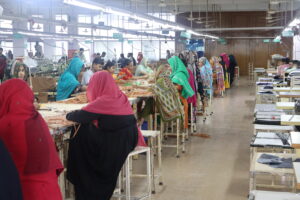
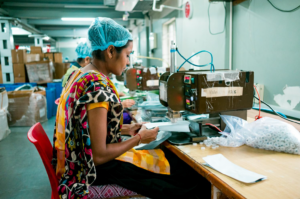
The SMEP Programme has teamed up with the Ethical Trading Initiative – Join us on 19 May 2026 from 10:00-11:00 (BST) for  Just transitions in manufacturing: integrating human rights and environmental sustainability, the next webinar in the ETI insights series featuring lessons learnt from the SMEP Programme. This webinar has now ended. You can access a recording of the webinar here.

Read More »

Making Plastics Recovery Work: Viability, Traceability and Transition Pathways

A three-part online webinar series on plastics end-of-life systems in Sub-Saharan Africa Session 1: Making plastics recovery models viableThursday 7 May 2026  Session 2: Traceability, standards and regulatory alignmentWednesday 13 May 2026  Session 3: Substitutes, compostability and regional pathwaysWednesday 20 May 2026  All sessions start at 09:00 UTC / 10:00 WAT / 11:00 CAT /

Read More »

Oil shocks ripple through plastics, but trade barriers hold back their greener alternatives

Oil price shocks reach far beyond the pump: into the plastic and synthetic fibres woven through global trade. Yet material substitutes, derived from agricultural residues and renewable biomass, already produced in developing countries, remain constrained by trade rules, standards and market access. © UN Trade and Development (UNCTAD)/Maria Durleva | Plastic nurdles, small pellets made from fossil fuels or recycled plastics, used as the raw material

Read More »

Biodegradability and compostability: Definitions and Standards Toolkit for Policymakers

Biodegradability and Compostability: Definitions and standards toolkit for policymakers This definitions and standards toolkit for policymakers is based on the SMEP Report “Reduction Management: Regional policies and standards on biodegradation and compostability in East and West Africa”. Developed by UNCTAD, the following list of recommended definitions has been based on the assessment of the most

Read More »

A review of parameters and requirements for an effective consumer label on plastics and plastics alternatives

A review of parameters and requirements for an effective consumer label on plastics and plastics alternatives Labelling has played a crucial role in guiding consumer choices, dating back to ancient Egyptian and Greek civilisations, where symbols denoted the origin and authenticity of goods. Plastic labelling began in 1988 with the Resin Identification Codes (RIC), introduced

Read More »

UNCTAD’s Global Trade Update: Mobilising trade to curb plastics pollution

UNCTAD’s Global Trade Update Mobilising trade to curb plastic pollution Plastics have fuelled global growth across various industries, but at an increasing environmental, economic, and social cost. Today, plastic pollution represents a systemic and transboundary crisis, disproportionately affecting developing countries that have limited capacity for waste management. Drawing on several outputs from the SMEP Programme,

Read More »

Clarifying the taxonomy of plastics and bioplastics: Toward a ‘Zero-Trace Plastic’ material framework

Clarifying the taxonomy of plastics and bioplastics: Toward a ‘Zero-Trace’ Plastic’ (ZTP) Material Framework In this communication brief, the authors outline an important challenge, particularly distinguishing between the plastic substitutes (nature-based non-plastic materials) and plastic alternatives (better plastics in terms of biodegradability and compostability, but still plastic traces are available) to avoid existing ambiguity. Thus,

Read More »
Scroll to Top