
Geopolitical shocks are exposing the fragility of global fertiliser supply chains. A surprising solution – and a major development opportunity – lies rotting in the fields.

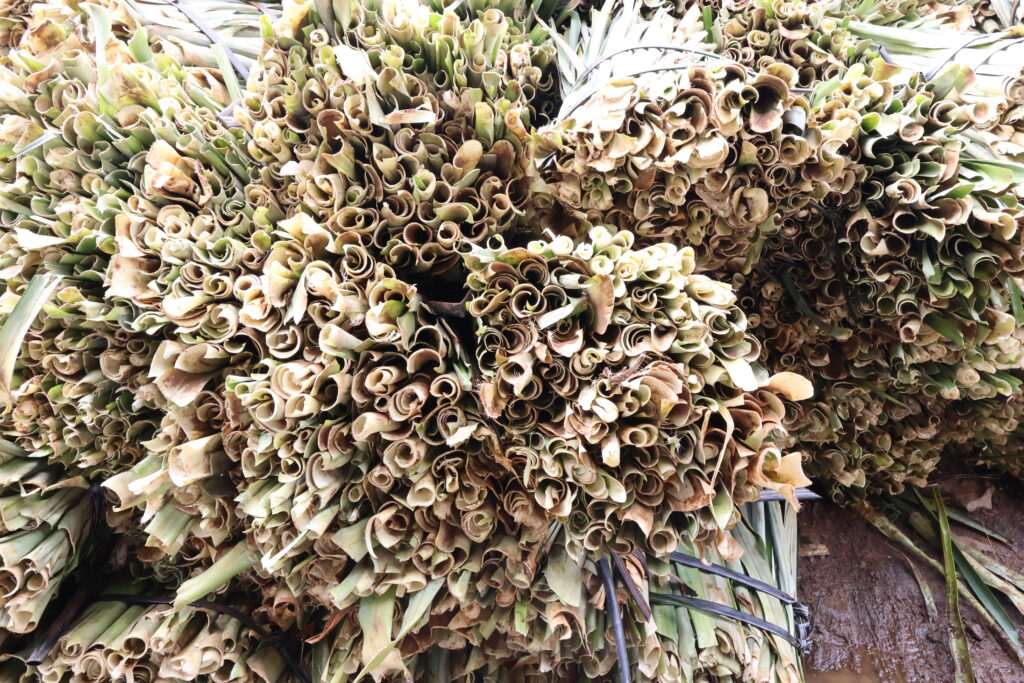
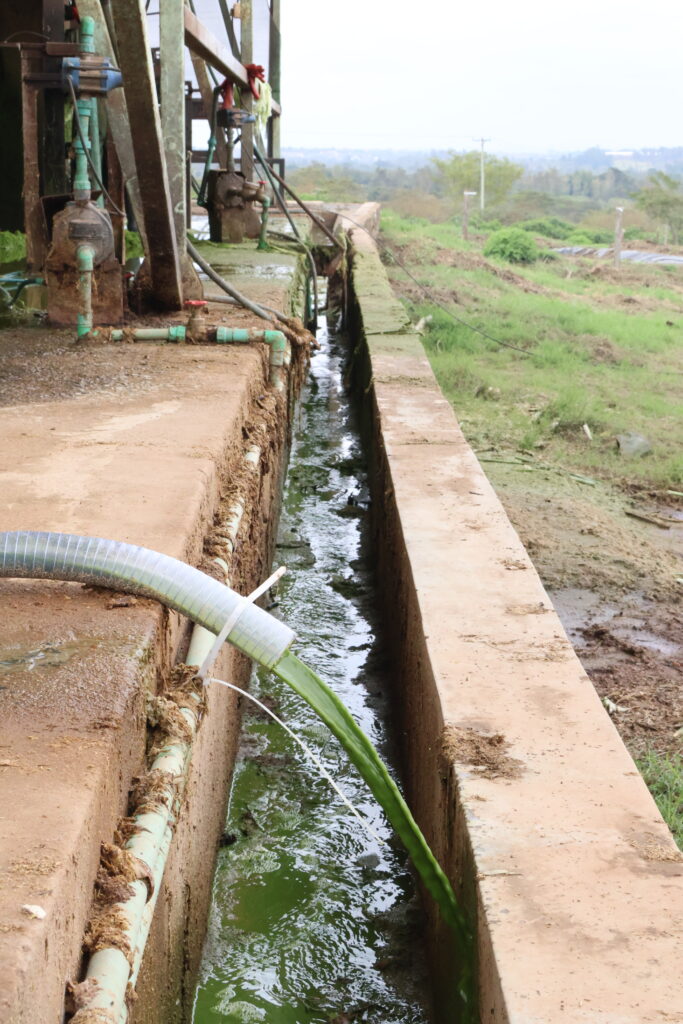
Somewhere on the outskirts of Thika, Kenya, a pineapple leaf processing facility hums through its daily routine. Workers feed long, sword-like leaves into a decorticating machine that extracts fine, lustrous fibres, strong enough to be woven into textiles, biodegradable, commercially promising. It is a compelling circular economy story. There is, however, a quiet footnote: the machine extracts approximately two per cent of the leaf’s mass as usable fibre. The remaining ninety-eight percent – a wet, enzyme-rich, biologically complex slurry of amino acids, organic acids, natural dyes and enzymatic proteins – flows out the back end of the process and back into the soil, or simply evaporates under the equatorial sun.
For now, that ninety-eight percent is waste. But it need not be. And understanding why it is not yet converted into value – and what would be required to change that – turns out to illuminate one of the more interesting industrial development questions of our time.
A shock that concentrated the mind
Few disruptions focus policymakers on agricultural supply chains quite like a price spike in urea, the world’s most widely traded nitrogen fertiliser. Since the closure of the Strait of Hormuz earlier this year, global urea prices have climbed from roughly $335 per metric tonne to $857, a rise of more than 200 percent in a matter of months. The structural reasons are well known: five countries account for just over half of all urea exports by value, and roughly thirty percent of all urea traded globally passes through the Strait of Hormuz at some point in its journey. Iran, Saudi Arabia, and Russia are among the dominant suppliers. The European Union, which sources 37 percent of its urea imports from Egypt and another 20 percent from Russia, has found itself acutely exposed. The same story applies to Brazil.
For developing-country farmers, who already contend with volatile input costs, unreliable credit markets, and increasingly erratic rainfall, this kind of shock is not an abstraction. It is a decision between planting and not planting.
This is the context in which biostimulants, a class of agricultural inputs that sits, conceptually and commercially, between plant nutrition and plant protection, have begun to attract serious policy attention. They do not add nitrogen to the soil the way urea does. What they do, when properly applied, is help plants use available nutrients more efficiently, improving uptake from whatever fertiliser is applied. They strengthen abiotic stress tolerance, in special a plant’s ability to withstand drought, flooding, heat, and salinity. And in certain formulations, particularly microbial inoculants derived from nitrogen-fixing bacteria like Bacillus or Azotobacter, they can partially substitute for synthetic nitrogen inputs altogether.
The biostimulant industry is not new. But it is growing rapidly, driven by regulatory maturation in the European Union and North America, rising demand for sustainable agriculture, and most recently due to the fertiliser price shock that has made farmers and policymakers newly receptive to alternatives.
The blue-green bridge
What makes biostimulants particularly interesting from a development perspective is where many of their key inputs originate. Seaweed and algal extracts are among the most commercially important biostimulant categories, and both are derived overwhelmingly from marine biomass. Carrageenan, a polysaccharide with biostimulant properties, is produced primarily from red seaweed harvested across the Philippines, Indonesia, and sub-Saharan coastal Africa. Agar-agar, with a unit price around $18.50 per kilogram, is similarly sourced from developing-country coastlines. Developing economies account for 70 percent of global agar-agar exports and 71 percent of carrageenan shipments.
This is a quietly remarkable statistic. It means that the countries best positioned, in terms of raw material access, to build a domestic biostimulant manufacturing industry are precisely those that currently benefit least from its value chain. They export the substrate; they import the processed product. They sell raw seaweed at $1.24 per kilogram and buy back alginate extract at $10.62. The eighty-fold value spread between the cheapest and most expensive bio-resource outputs is not primarily a measure of technological complexity. It is a measure of where in the value chain countries have historically been participating.
The same logic applies inland. Agricultural residues – the stalks, husks, leaves, and processing by-products generated by farming sectors across South and Southeast Asia, Sub-Saharan Africa, and Latin America – contain a remarkable diversity of biologically active compounds. Protein hydrolysates, amino acids, humic and fulvic acids, and enzyme precursors are all present in material that is currently either burned in the field, fed to livestock, converted into relatively low-value applications (biochar, biogas) or treated as processing effluent.
The pineapple leaf case is instructive precisely because it illustrates not failure, but the early stage of a trajectory. The fibre extraction is a genuine advance. But the facility’s ninety-eight per cent residual fraction contains exactly the kinds of compounds – amino acids, organic acids, enzymatic proteins – that the clients of the biostimulant industry pays handsomely for in their refined form. The bottleneck is not biological. It is industrial: the extraction equipment, processing protocols, human capital expertise, quality certification, and market linkages that would allow that residual fraction to become a valuable input rather than a discarded output.
The regulatory gap as both problem and opportunity
A crucial and underappreciated dimension of the biostimulant story is regulatory. The European Union has progressively formalised biostimulants as a distinct product category, separate from plant protection products (e.g. pesticides) and from plant nutrition (e.g. fertilisers). This matters commercially because it opens specific regulatory pathways for product approval, labelling, and market access. It signals to producers that investment in this category will encounter a defined regulatory environment rather than legal ambiguity.
In much of the Global South, that clarity does not yet exist. Biostimulants are variously classified alongside fertilisers, alongside pesticides, or simply left without a category at all. The Harmonised System codes used for customs purposes group biostimulants imprecisely, such as into HS 3808.93, which commingles plant growth regulators with herbicides, or HS 3101.00, which merges them with animal and vegetable fertilisers, making it nearly impossible to track actual trade flows or design targeted industrial policy.
This is not a minor administrative inconvenience. The inability to measure trade in a product is a significant barrier to attracting investment into its production. What cannot be classified cannot easily be taxed, subsidised, certified, or financed. The World Customs Organisation represents an important venue for addressing this gap, as trade volumes grow, the case for dedicated biostimulant HS codes becomes increasingly compelling. For developing-country governments, advocating for that reclassification is not merely a technical exercise; it is an act of industrial policy with material consequences for domestic industry formation.
The water connection
There is one further dimension to the biostimulant opportunity in developing countries that receives insufficient attention: the relationship between water quality and soil health.
In countries where industrial wastewater treatment infrastructure is limited or unevenly applied, effluent from tanneries, textile mills, and food processing facilities regularly enters waterways that are eventually used for irrigation. The downstream effect on soils can be severe and lasting, particularly for the soil microbiome that holds an invisible but essential ecosystem of bacteria and fungi which mediates plant nutrition and resilience. Soils depleted of their microbial diversity become, in effect, chemically dependent: increasingly reliant on synthetic inputs to compensate for biological functions that healthy soil communities would perform naturally.
Microbial biostimulants, such as plant growth-promoting rhizobacteria and arbuscular mycorrhizal fungi in particular, offer a complementary response. They do not substitute for improved water treatment, which remains the more fundamental intervention. But they can help restore the biological foundations of degraded agricultural soils while longer-term infrastructure investments are made. In this sense, biostimulants are not merely an agricultural input. They are a climate and environmental adaptation tool, one that developing countries could increasingly produce domestically from the biomass already available to them.
What would change the equation?
The biostimulant opportunity for developing countries is real, but it will not materialise automatically. Several conditions need to develop, more or less simultaneously.
Processing capacity must be built at origin. This means investment, public and private, domestic and foreign, in the extraction and formulation infrastructure that converts raw biological material into market-ready inputs. Joint ventures between biostimulant manufacturers that possess technical knowledge and developing-country biomass producers that hold the feedstocks and local market access represent a structurally natural arrangement. International programmes and development finance institutions can have a distinct role in de-risking these early-stage investments, particularly where markets are nascent and regulatory frameworks are still forming.
Regulatory frameworks must be developed at the national level. This does not mean simply transposing EU regulation, since different institutional capacities require adapted approaches. But establishing biostimulants as a legally recognised and administratively trackable product category is a necessary precondition for eventually building domestic industries, attracting certification bodies, and enabling export market access.
And the research agenda must follow the feedstocks. The biostimulant potential of tropical and subtropical agricultural residues – think pineapple leaves, banana pseudostems, cassava processing waste, fishery by-products – is significantly undercharacterised in the scientific literature, which skews heavily toward temperate-climate biomass streams. Closing that knowledge gap is itself a development investment, and one well suited to South-South research cooperation.
The missing link
There is something elegantly circular about the biostimulant story as it applies to developing economies. The ocean provides the substrate – seaweed, algae, crustacean shells – that when processed into biostimulants, can restore the nutrient-cycling capacity of farmland. Residual agricultural biomass, currently treated as a cost of production, becomes an input to a high-value industry. Soils degraded by decades of insufficient water treatment infrastructure are partially rehabilitated by microbial inputs derived, ultimately, from the same coastal and agricultural ecosystems that surround them. Nutrients flow from sea to land, and the geophysical metabolism of economic activity, which too often moves biomass from farms to cities to landfills, finds a more productive loop.
Realising that circularity requires deliberate effort. It requires trade economists to sit alongside agronomists, regulatory experts alongside farmers, development finance alongside private sector partners. It requires, in short, exactly the kind of cross-sectoral policy coordination that international organisations exist to facilitate.
The ninety-eight percent of the pineapple leaf currently flowing out the back of the decorticating machine is not a mark of failure. It is a measure of how early we are in this industry’s development, and an open invitation to the next stage. The question is not whether developing countries have what it takes to build this sector. They have the coastlines, the agricultural base, the biomass, and, increasingly, the industrial ambition. The question is whether the trade architecture, the regulatory frameworks, and the investment climate will be assembled quickly enough for them to lead it.

Henrique Pacini
SMEP-UNCTAD Programme Lead
Insights were taken from discussions during the European Biostimulant Industry Council (EBIC) in Brussels, June 2026, and from reflections based on the SMEP programme implementation in Africa and South Asia. Views and opinions are my own.