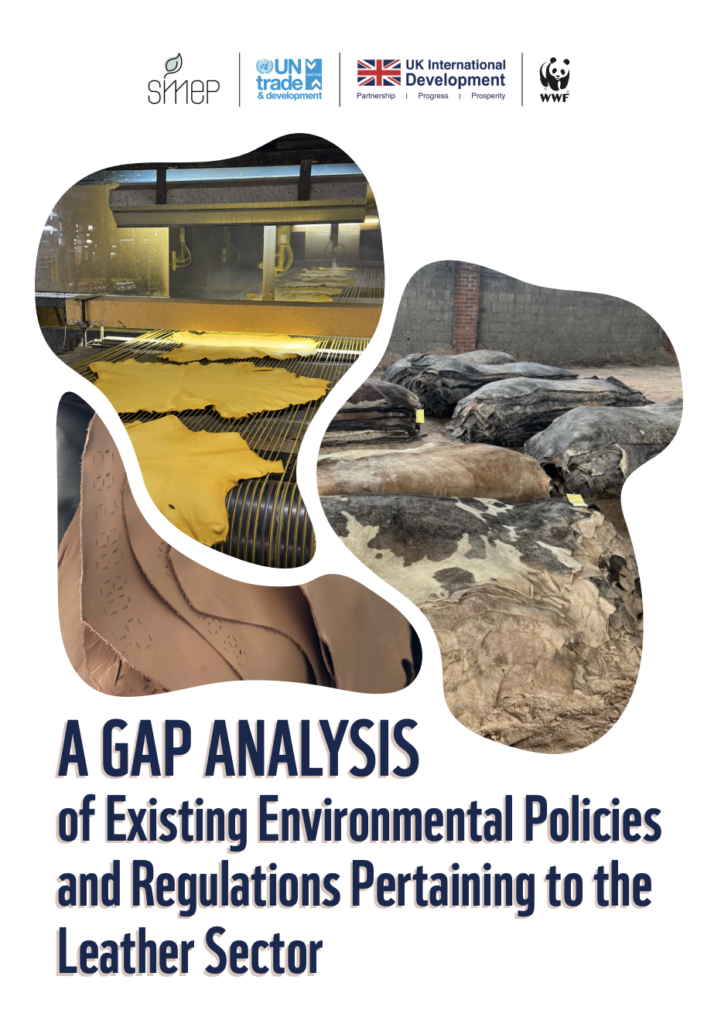
A gap analysis of existing environmental policies and regulations pertaining to the leather sector
Leather is one of the major pillars of Pakistan’s economy, standing as the third-largest export sector and contributing approximately four per cent to the national GDP. While leather production utilises hides and skins (a byproduct of the meat industry), it is not immune to environmental and social risks including water pollution, chemical use, solid waste generation, and occupational health risks. Moreover, increasing consumer awareness and demand for sustainable products along with global requirements and emerging regulatory pressures highlight the need for a robust environmental compliance and governance framework within the leather industry.
This document presents a brief review of Pakistan’s industrial environmental policy landscape, focusing on the leather sector. The analysis examines the extent to which current regulatory frameworks directly or indirectly address environmental risks associated with leather manufacturing and identifies gaps that may hinder effective environmental governance.